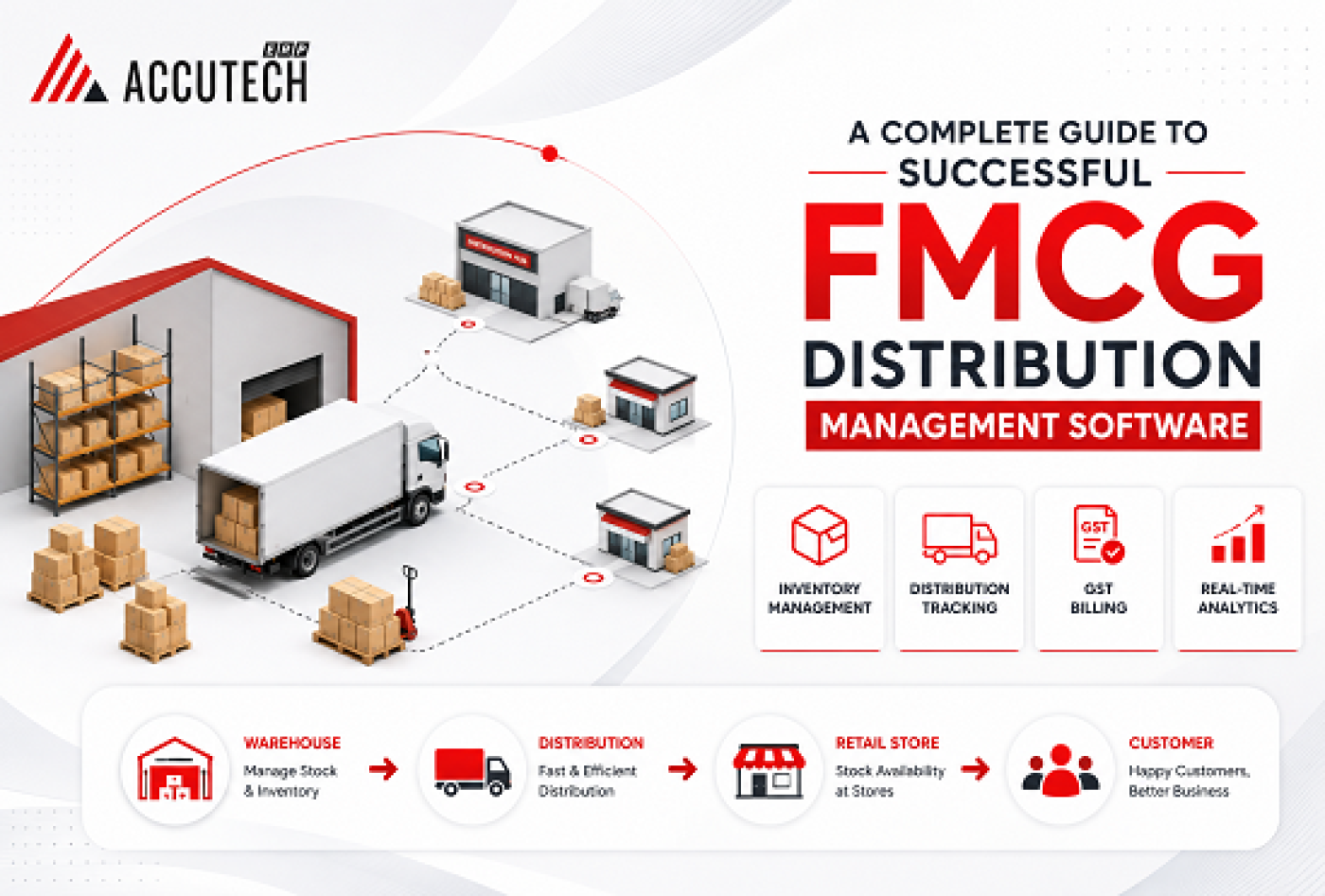
The fast-moving consumer goods (FMCG) industry is one of the most dynamic and competitive sectors in the business landscape. Every day, millions of products move through distribution networks, retail chains, and warehouses. Managing this complex ecosystem requires precision, speed, and real-time visibility.
This is where FMCG management software becomes indispensable. In 2026, businesses that have adopted modern distribution management solutions are experiencing up to a 40% reduction in operational costs, improved inventory turnover, and enhanced compliance with GST regulations. A reliable FMCG Distribution ERP Software also helps businesses connect inventory, sales, billing, accounting, and distribution processes through one centralized platform.
Whether you are a growing distributor, an established retail chain, or an FMCG manufacturer looking to streamline operations, FMCG distribution management software has become the backbone of successful operations. This comprehensive guide explores everything you need to know about implementing, optimizing, and maximizing the potential of modern distribution solutions.
1. What is FMCG Management Software?
FMCG management software is a specialized enterprise resource planning (ERP) solution designed to address the unique challenges of fast-moving consumer goods businesses. This type of software integrates inventory management, sales tracking, purchase orders, accounting, billing, and reporting into a single unified platform.
Unlike generic ERP systems, FMCG management software is purpose-built with features specifically tailored for the high-volume, fast-paced operations that characterize the consumer goods industry. An advanced FMCG Distribution ERP Software is engineered to handle:
- Real-time inventory tracking across multiple warehouses and retail locations
- Complex multi-tier distribution networks
- High-volume transaction processing
- Quick-turn billing cycles
- Regulatory compliance, including GST and tax requirements
- Real-time reporting for decision-makers
The core advantage of FMCG distribution management software is its ability to transform manual, time-consuming processes into automated workflows. This not only saves time but also significantly reduces errors, improves visibility across the supply chain, and enables business leaders to make data-driven decisions.
2. Why FMCG Distribution Management Software Matters
The FMCG sector operates on razor-thin margins with intense competition. Retailers demand faster delivery times, distributors need to minimize stockouts, and manufacturers must track products through complex supply chains. Traditional manual management systems simply cannot keep pace with these demands.
Here is why FMCG distribution management software has become critical:
Speed and Efficiency
FMCG retail chain accounting software automates invoice generation, payment processing, and reconciliation. What used to take days now happens in minutes. Distributors can process hundreds of transactions daily without manual intervention, freeing up their teams to focus on strategic activities.
Real-Time Visibility
With FMCG management software, you have a 360-degree view of your inventory at any moment. Know exactly what is in stock at each location, what is in transit, and what needs to be ordered. This visibility prevents stockouts that cost lost sales and overstocking that ties up working capital.
Compliance and Risk Management
GST compliance is non-negotiable in India. FMCG distributor billing software comes equipped with automated GST calculations, invoice management, and return filing capabilities. This ensures you never miss a deadline and remain audit-ready at all times.
Cost Reduction
The software eliminates redundant processes, reduces manual errors that lead to rework, and optimizes inventory levels. On average, businesses implementing comprehensive distribution solutions see 25-35% reduction in operational costs within the first year.
3. Key Features Every FMCG Solution Should Include
Not all FMCG management software solutions are created equal. To ensure you are getting a system that truly meets your needs, look for these essential features:
Feature | Description |
Inventory Management | Real-time stock tracking, multi-location warehouse management, automated reorder points |
Sales & Order Management | Order processing, delivery tracking, returns management, sales analytics |
Billing & Invoicing | Automated invoice generation, payment tracking, credit note management |
GST Compliance | Automated tax calculations, GSTR-1/2 filing, tax reports, compliance tracking |
Financial Reporting | Ledger reports, P&L statements, balance sheets, cash flow analysis |
These features form the foundation of any robust FMCG management software. However, the best solutions go beyond basics to include advanced analytics, mobile accessibility, and customizable workflows that adapt to your specific business model.
4. Understanding FMCG Retail Chain Accounting Software
FMCG retail chain accounting software is a specialized subset of distribution management solutions designed specifically for organized retail operations. Retail chains whether small regional networks or large national operations have unique accounting and operational requirements that differ significantly from traditional wholesale distributions.
Key Differences in Retail Accounting:
- Multi-store consolidation: Managing accounting across dozens or hundreds of store locations
- POS integration: Syncing point-of-sale data with accounting systems for real-time reconciliation
- Stock movement tracking: Monitoring inventory transfers between stores
- Supplier management: Handling hundreds of vendor invoices from different manufacturers
- Revenue recognition: Accurate accounting for sales across multiple channels
- Margin analysis: Tracking profitability by store, category, and product
A properly configuredFMCG retail chain accounting software system provides consolidated financial statements across all store locations, individual store profit and loss analysis, automated daily/weekly/monthly reconciliation, real-time cash flow visibility, and quick variance analysis between planned and actual performance.
5. The Role of FMCG Distributor Billing Software
For FMCG distributors, billing is far more complex than a simple invoice. FMCG distributor billing software automates not just invoicing, but the entire billing ecosystem that keeps distributor operations running smoothly.
Core Billing Functions:
- Order to Invoice Cycle: Automatic generation of invoices from confirmed orders with real-time stock deduction
- Dynamic Pricing: Support for volume discounts, promotional pricing, and customer-specific rates
- Payment Management: Tracking of cash, cheque, digital, and credit payments with automated reconciliation
- Credit Management: Credit limit enforcement, aging analysis, and overdue payment alerts
- Return Processing: Quick processing of damaged goods, expired stock, and customer returns
- Tax Compliance: Automatic GST calculations, HSN coding, and tax summary generation
The advantage of FMCG distributor billing software is that it reduces manual invoice creation time by up to 90%, minimizes billing errors that lead to disputes, and provides distributors with real-time insights into their receivables and cash flow positions.
6. Benefits of Implementing Modern Distribution Solutions
Organizations that invest in modern FMCG distribution management software experience tangible benefits that impact their bottom line:
Operational Efficiency
Automated processes reduce manual data entry by 80%, freeing up staff to handle exception cases and strategic tasks. Order processing time reduces from hours to minutes.
Improved Inventory Management
Real-time stock visibility prevents stockouts that cost lost sales and reduces inventory carrying costs by optimizing stock levels. Average inventory reduction: 15-20%.
Enhanced Customer Service
Faster order fulfillment, accurate delivery tracking, and quick order status updates improve customer satisfaction and loyalty. On-time delivery performance typically improves by 25-30%.
Better Financial Control
Real-time financial visibility, automated reconciliation, and comprehensive reporting enable better cash management and forecasting. Days sales outstanding (DSO) typically reduces by 10-15 days.
Regulatory Compliance
Automated GST compliance, audit trails, and regulatory reporting reduce compliance risks and ensure zero penalties for missed deadlines or incorrect filings.
7. Best Practices for Successful Implementation
Implementing FMCG management software is a significant undertaking. Following these best practices ensures a smooth transition and rapid value realization:
1. Start with Clear Objectives
Define what success looks like for your organization. Are you aiming to reduce operational costs? Improve delivery times? Enhance compliance? Clear objectives guide your implementation strategy and help measure success.
2. Involve Key Stakeholders Early
Engage warehouse managers, sales teams, accounting staff, and logistics coordinators from the beginning. Their frontline insights are invaluable for proper configuration and adoption.
3. Phase Your Implementation
Rather than a big-bang approach, implement in phases. Start with one module, ensure it is working smoothly, then move to the next. This reduces disruption and allows for learning.
4. Invest in Training
Comprehensive training ensures your teams can use the system effectively. Budget for initial training, ongoing support, and periodic refresher sessions as the system evolves.
5. Establish Data Governance
Clean data is essential. Before implementing, cleanse your existing data, establish master data standards, and implement processes to maintain data quality going forward.
6. Optimize Continuously
Post-implementation, regularly review performance against your objectives. Use system analytics to identify bottlenecks and optimization opportunities. Most benefits come from continuous improvement.
8. Common Mistakes to Avoid
Many organizations struggle with their FMCG management software implementations. Here are the most common pitfalls and how to avoid them:
Mistake 1: Choosing the Wrong Software
Using generic accounting software instead of purpose-built FMCG distribution management software leads to compromises on functionality. FMCG-specific solutions are built for your industry's unique needs.
Mistake 2: Insufficient Planning
Rushing into implementation without proper planning leads to scope creep, cost overruns, and poor adoption. Invest time in requirements analysis, vendor evaluation, and project planning.
Mistake 3: Underestimating Change Management
Technology is only half the battle; people are the other half. Without proper change management, resistance from staff can derail even the best implementations.
Mistake 4: Ignoring Data Quality
Migrating dirty data from old systems into your new system just perpetuates problems. Clean data before migration and establish data governance practices.
Mistake 5: Over-Customization
Extensive customization increases costs, extends implementation timelines, and makes upgrades difficult. Work with the software's standard capabilities first; customize only when absolutely necessary.
9. Frequently Asked Questions About FMCG Management Software
Q1: What is the best FMCG distributor billing software for small businesses?
For small businesses, look for cloud-based solutions that are easy to set up with minimal IT support. Systems should offer essential billing, inventory, and basic reporting capabilities without unnecessary complexity. Many vendors offer tiered pricing, so you pay only for features you need.
Q2: How does FMCG management software improve customer satisfaction?
FMCG management software improves customer satisfaction through faster order fulfillment, accurate delivery tracking, fewer billing errors, and quicker response to customer queries. Real-time order status updates and reduced order-to-delivery cycles contribute to better customer experience.
Q3: Can FMCG retail chain accounting software integrate with existing systems?
Yes, modern FMCG retail chain accounting software comes with pre-built integrations for common systems like point-of-sale systems and e-commerce platforms. Most also offer APIs for custom integrations.
Q4: What is the typical implementation timeline for FMCG distribution management software?
Implementation timelines vary based on complexity and company size. A small business with a single location might go live in 4-6 weeks, while a large enterprise with multiple branches could take 3-6 months. Cloud-based solutions typically deploy faster than on-premise systems.
Q5: How does FMCG distributor billing software handle returns and adjustments?
Modern FMCG distributor billing software manages returns through automated credit note generation, reversal of original invoice entries, and inventory reintegration. All adjustments are tracked with full audit trails for compliance.
Q6: What security features should I expect in FMCG management software?
Enterprise-grade FMCG management software should include role-based access controls, data encryption, multi-factor authentication, regular security audits, automated backup and disaster recovery, and activity logging for audit purposes.
Q7: Can FMCG retail chain accounting software scale as my business grows?
Yes, cloud-based FMCG retail chain accounting software is inherently scalable. As you add new stores or expand product lines, the system scales automatically without requiring infrastructure investments.
Q8: How often should I update my FMCG distribution management software?
Cloud-based solutions receive continuous updates seamlessly, while on-premise systems typically have scheduled annual updates. Regular updates are important for security patches and compliance with regulatory changes.
Q9: What is the difference between FMCG distribution management software and general accounting software?
General accounting software focuses primarily on financial record-keeping. FMCG distribution management software integrates inventory, order processing, sales tracking, and logistics alongside accounting. This industry-specific approach is optimized for high-volume transactions and complex supply chains.
Q10: How can FMCG management software help reduce inventory costs?
Through automated reorder point calculations, demand forecasting, and multi-warehouse optimization, FMCG management software helps maintain optimal inventory levels. The software identifies slow-moving items and prevents overstocking, typically resulting in 15-20% inventory reduction.
Conclusion:
The FMCG industry is evolving rapidly, and businesses that continue relying on manual processes are at a significant disadvantage. They often struggle with limited visibility, compliance challenges, inventory inaccuracies, and missed opportunities to optimize operations and reduce costs.
Modern FMCG management software represents a strategic investment in the future of your business. Whether you are a distributor implementing FMCG distributor billing software, a retail chain deploying FMCG retail chain accounting software, or a manufacturer using comprehensive distribution solutions, the impact can be transformative.
Accutech ERP helps FMCG businesses automate billing, inventory management, accounting, distribution, and reporting through a unified platform. With real-time visibility and data-driven insights, businesses can improve operational control, reduce errors, manage stock efficiently, and make faster, more informed decisions.
The organizations leading their industries are the ones embracing automation, real-time visibility, and data-driven decision-making. By adopting solutions such as Accutech ERP, FMCG businesses can achieve better margins, improve customer satisfaction, and scale their operations efficiently.