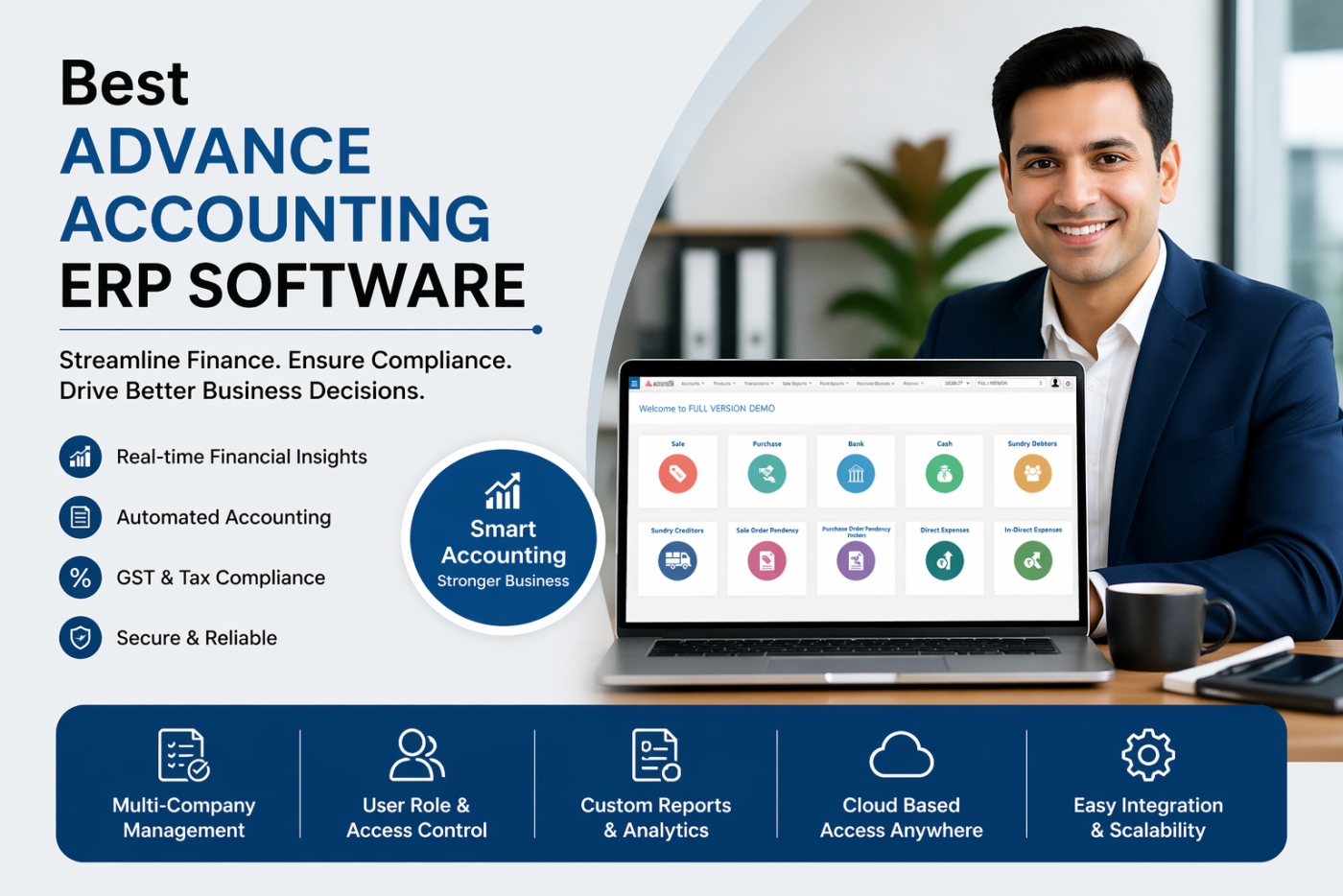
Introduction: Why Advanced Accounting ERP Software Matters in 2026
In today's rapidly evolving business landscape, the importance of robust accounting ERP software cannot be overstated. Organizations across every sector are facing unprecedented pressure to streamline operations, reduce costs, and maintain compliance with ever-changing regulations. The traditional approach of managing accounting through spreadsheets and disparate systems has become obsolete and risky.
Industry Insight: According to recent market research, 78% of businesses that implemented advanced ERP systems reported significant improvements in operational efficiency within the first year of adoption.
The best accounting ERP software of 2026 offers unprecedented capabilities that extend far beyond simple bookkeeping. Modern business accounting solutions integrate accounting, inventory management, GST compliance, and real-time analytics into a single, unified platform. This integration eliminates data silos, reduces manual errors, and provides executives with actionable insights needed for strategic decision-making.
Whether you're a small startup, medium-sized business, or enterprise organization, choosing the right ERP for small business or enterprise operations can be the difference between scaling successfully and struggling with outdated processes.
What is Advanced Accounting ERP Software?
Advanced accounting ERP software is a comprehensive, integrated business management platform designed to streamline and automate core business processes. Unlike traditional accounting software that focuses solely on financial records, modern ERP systems provide end-to-end business management capabilities.
Core Definition
An advanced ERP system is:
- Integrated: Connects all departments—accounting, inventory, sales, procurement, and HR—through a single database
- Real-Time: Provides instant visibility into financial data, inventory levels, and business metrics
- Cloud-Based: Accessible from anywhere, anytime, on any device for maximum flexibility
- Automated: Reduces manual data entry and human errors through intelligent automation
- Compliant: Ensures GST compliance, tax accuracy, and regulatory adherence automatically
- Scalable: Grows with your business without requiring system overhauls
Key Distinction: ERP vs Traditional Accounting Software
While traditional accounting software handles invoicing and general ledger management, best ERP software provides holistic business intelligence. An ERP system integrates:
- 📊 Financial Management and General Ledger
- 📦 Inventory and Stock Management
- 💼 Multi-business and Multi-location Support
- 🏛️ GST and Tax Compliance
- 📈 Real-time Analytics and Reporting
- 🏪 Sales Order and Purchase Management
Key Features of the Best ERP Accounting Systems in 2026
Modern advanced ERP solutions come equipped with features that address the complex needs of contemporary businesses. Here are the essential features that define the best accounting ERP software:
1. Integrated Accounting Module
✅ Complete Financial Management
The accounting heart of any ERP system includes:
- General Ledger with automatic reconciliation
- Accounts Receivable and Payable management
- Multi-currency support for global operations
- Budget planning and variance analysis
- Financial statement generation (P&L, Balance Sheet, Cash Flow)
2. Advanced Inventory Management
✅ Smart Stock Control
Inventory management software features include:
- Real-time stock tracking across multiple locations
- Batch and Serial number tracking
- Automated reorder point calculations
- Warehouse management capabilities
- Product mix analysis and demand forecasting
3. GST and Tax Compliance Automation
✅ Regulatory Compliance Made Simple
GST accounting software automatically:
- Calculate GST on all transactions
- Generate GSTR-1, GSTR-2, GSTR-3B returns
- Manage Input Tax Credit (ITC) automatically
- Track HSN/SAC codes for compliance
- Generate tax-compliant invoices
4. Real-Time Analytics and Reporting
✅ Data-Driven Decision Making
Business accounting solutions provide:
- Customizable dashboards with KPI tracking
- Sales analysis by product, region, and customer
- Profitability analysis and margin tracking
- Inventory turnover metrics
- Export reports in multiple formats
5. Multi-Location and Multi-Business Support
✅ Centralized Yet Flexible Control
Manage multiple business units or branch locations from one platform:
- Separate books for each business entity
- Consolidated reporting across all branches
- Standardized pricing and schemes across locations
- Branch-wise performance tracking
6. Mobile and Cloud Accessibility
✅ Work From Anywhere
Cloud accounting software ensures:
- Access from any device (desktop, tablet, smartphone)
- Real-time data synchronization
- Offline capabilities with automatic sync
- Enhanced security with encryption
- Automatic backups and disaster recovery
10 Key Benefits of Implementing Advanced Accounting ERP Software
Organizations that adopt the best ERP software experience transformative benefits across their entire operation. Here are the top 10 advantages:
1. Increased Operational Efficiency
Advanced ERP systems automate repetitive tasks, eliminating manual data entry and processing. Teams spend less time on administrative work and more time on strategic initiatives. Studies show productivity improvements of 20-30% within the first year.
2. Reduced Operational Costs
By streamlining processes and automating workflows, businesses reduce labor costs significantly. Cloud accounting software also eliminates expensive on-premise infrastructure and maintenance requirements.
3. Improved Accuracy and Reduced Errors
Accounting ERP software minimizes human errors through automated calculations and validations. This leads to more accurate financial reporting and reduces audit issues.
4. Enhanced Regulatory Compliance
Built-in compliance features ensure your business stays aligned with GST, income tax, and other regulations. GST accounting software automatically generates compliant returns and invoices.
5. Better Decision-Making Through Real-Time Data
Best ERP accounting systems provide instant access to financial data, enabling management to make informed decisions quickly rather than waiting for month-end reports.
6. Improved Customer Service
With complete customer information and order history at your fingertips, your team can respond to customer inquiries faster and provide personalized service.
7. Enhanced Inventory Management
Inventory management software integrated with your ERP system prevents stockouts and overstocking, optimizing working capital.
8. Scalability and Growth Support
As your business grows, advanced accounting ERP software scales seamlessly without requiring system replacements or major upgrades.
9. Centralized Data Management
A single source of truth eliminates data inconsistencies and ensures all departments work with the same information, improving collaboration.
10. Competitive Advantage
Organizations with modern ERP solutions respond faster to market changes, innovate quicker, and maintain better margins than competitors using legacy systems.
Traditional Accounting vs Advanced ERP: Side-by-Side Comparison
To understand why best accounting ERP software is essential for modern businesses, compare traditional approaches with integrated ERP solutions:
Aspect | Traditional Accounting Software | Advanced ERP System |
Integration | Limited; multiple disconnected systems | Fully integrated across all departments |
Data Accuracy | Manual entry; prone to errors | Automated; high accuracy |
Reporting Speed | Days or weeks; manual compilation | Real-time dashboards and analytics |
Compliance | Manual tracking; audit risk | Automated compliance management |
Scalability | Difficult to scale; requires new software | Grows with your business |
Cost Structure | Multiple software licenses; high admin costs | Single platform; predictable costs |
Mobile Access | Limited or not available | Full mobile support |
Multi-Location Support | Complex; requires separate systems | Built-in support |
GST Compliance | Manual calculations; error-prone | Automated GST calculations and returns |
Implementation Time | 2-3 months | 2-4 weeks with cloud-based solutions |
How to Choose the Right Advanced Accounting ERP Software for Your Business
Selecting the best ERP software requires careful evaluation of your business needs, budget, and growth plans. Follow this comprehensive guide:
Step 1: Assess Your Business Requirements
Before evaluating solutions, understand your needs:
- Number of users: How many people will use the system?
- Modules needed: Which business functions must the ERP cover?
- Location count: How many branches or warehouses will it manage?
- Integration requirements: What existing systems must it integrate with?
- Compliance needs: What regulatory requirements apply to your industry?
Step 2: Evaluate Key Features
Ensure the accounting ERP software includes:
- Complete accounting and financial management
- Advanced inventory management
- GST and tax compliance automation
- Real-time analytics and reporting
- Multi-location and multi-business support
- Mobile accessibility
- Data security and backup capabilities
- Scalability for future growth
Step 3: Consider Deployment Options
Choose between deployment models:
- Cloud-Based ERP: Hosted on vendor servers, accessible anywhere, minimal IT overhead
- On-Premise ERP: Installed on your servers, complete control, higher maintenance costs
- Hybrid Approach: Combination of cloud and on-premise components
Cloud accounting software is increasingly preferred for its flexibility, cost-effectiveness, and automatic updates.
Step 4: Budget Planning
Consider total cost of ownership:
- Software licensing costs
- Implementation and setup fees
- Training and support expenses
- Hardware and infrastructure (if on-premise)
- Ongoing maintenance and upgrade costs
Step 5: Vendor Evaluation
Assess vendors based on:
- Experience: How long has the vendor been in business?
- Industry expertise: Do they have experience with your industry?
- Support quality: What support options are available?
- Security certifications: Are they ISO certified? Do they comply with data protection regulations?
- Customer reviews: What do existing customers say?
- Product roadmap: Are they continuously improving the product?
Step 6: Request Demos and Trial Periods
Always request a demonstration and ideally a free trial. The best way to evaluate ERP solutions is hands-on experience with your actual data.
Pro Tip:
Involve key stakeholders from accounting, inventory, sales, and IT departments in the evaluation process. Their input ensures the selected ERP system meets diverse departmental needs.
Industry-Specific Advanced ERP Solutions
While best accounting ERP software provides core functionality, many vendors offer industry-specific customizations. Here are common industry applications:
ERP for Retail Businesses
Retail ERP solutions focus on:
- Point-of-sale (POS) integration
- Multi-store inventory synchronization
- Customer loyalty program management
- Seasonal demand forecasting
- Supplier relationship management
ERP for Distribution and Wholesale
Distribution industry ERP includes:
- Multi-warehouse management
- Supply chain optimization
- Supplier and distributor collaboration
- Complex pricing and discount management
- Order consolidation across regions
ERP for Manufacturing
Manufacturing ERP systems provide:
- Bill of materials (BOM) management
- Production scheduling and planning
- Quality control and batch tracking
- Capacity planning
- Cost accounting and variance analysis
ERP for Pharmaceutical Industry
Pharma manufacturing software features:
- Batch and expiry tracking
- Regulatory compliance (GMP, FDA)
- Lot traceability
- Temperature and condition monitoring
- Complete audit trail
ERP for FMCG Companies
FMCG ERP software handles:
- High-volume, low-margin operations
- Complex distribution networks
- Promotional campaign management
- Trade receivables management
- Route optimization for delivery
Industry Insight:
Selecting an ERP system tailored to your specific industry ensures you get functionalities that directly address your sector's unique challenges, rather than generic solutions.
2026 ERP Trends: The Future of Advanced Accounting Software
The accounting ERP software landscape is evolving rapidly. Understanding emerging trends helps businesses stay competitive. Here are the key trends shaping 2026:
1. Artificial Intelligence and Machine Learning Integration
Modern ERP systems increasingly incorporate AI for:
- Predictive analytics for demand forecasting
- Automated invoice matching and payment recommendations
- Intelligent expense categorization
- Fraud detection and prevention
- Natural language processing for query resolution
2. Heightened Focus on Data Security and Privacy
With increasing cyber threats, cloud accounting software now emphasizes:
- End-to-end encryption
- Multi-factor authentication
- Role-based access controls
- Compliance with GDPR, ISO 27001
- Regular security audits and certifications
3. Mobile-First and Hybrid Work Support
Post-pandemic, best ERP accounting systems now feature:
- Native mobile applications
- Offline-to-online synchronization
- Progressive web app capabilities
- Cross-device seamless experience
4. ESG (Environmental, Social, Governance) Reporting
Advanced ERP solutions now support sustainability tracking:
- Carbon footprint calculations
- Supplier sustainability ratings
- Waste reduction tracking
- ESG compliance reporting
5. API-First and Microservices Architecture
Modern ERP software allows seamless integration with best-of-breed applications through:
- RESTful APIs and webhooks
- Pre-built connectors to popular tools
- Modular architecture
- Integration marketplaces
6. Predictive Analytics and Forecasting
Business accounting solutions now provide:
- Cash flow forecasting
- Sales predictions based on historical trends
- Inventory optimization
- Customer churn prediction
7. Increased Automation and RPA Integration
Accounting ERP software now integrates with Robotic Process Automation (RPA) for:
- Automated invoice processing
- Expense claim processing
- Payroll processing
- Reconciliation automation
8. Sustainability and Green Initiatives
Advanced accounting ERP systems help track:
- Energy consumption
- Waste management
- Supply chain emissions
- Sustainable procurement
2026 Prediction: By 2026, 85% of new ERP implementations will include AI-powered features for enhanced analytics and process automation, making intelligent accounting ERP software the new standard.
Making Accounting Management Smarter and More Connected
As businesses handle growing transaction volumes, multiple locations, inventory movements, tax requirements, and financial reporting, having all these activities connected through one system becomes increasingly valuable. While searching for india's best accounting software, businesses should focus on a solution that goes beyond basic bookkeeping and supports real-time reporting, GST compliance, inventory control, automation, and multi-location operations. A well-integrated ERP platform can reduce repetitive work, improve data accuracy, and give management clearer financial visibility for everyday decisions and long-term growth.
Trending FAQs About Advanced Accounting ERP Software - 2026
Here are the most frequently asked questions about best accounting ERP software in 2026, with comprehensive answers:
What is the difference between ERP and accounting software in 2026?
Accounting software focuses primarily on financial transactions—invoicing, billing, and general ledger management. Advanced ERP systems, however, integrate accounting with inventory management, supply chain, human resources, sales, and customer relationship management into one unified platform. Modern accounting ERP software provides a 360-degree view of your business operations, enabling better decision-making and operational efficiency.
Can small businesses benefit from advanced accounting ERP software?
Absolutely! ERP for small businesses has become increasingly accessible and affordable. Cloud-based solutions like AccuTech ERP are specifically designed for SMBs with features such as:
- Affordable subscription-based pricing
- Quick implementation (2-4 weeks)
- No expensive IT infrastructure
- Scalability as the business grows
Small businesses gain the same operational advantages as large enterprises, including automated accounting, inventory management, and compliance tracking.
Is cloud-based accounting ERP software secure enough for sensitive financial data?
Yes, modern cloud accounting software is exceptionally secure—often more secure than on-premise solutions. Leading vendors implement:
- Military-grade encryption (AES-256)
- Multi-factor authentication
- Regular security audits and penetration testing
- Compliance certifications (ISO 27001, SOC 2)
- Automated backups with disaster recovery
- Redundant data centers for zero downtime
In fact, reputable ERP vendors invest heavily in security infrastructure, often exceeding what individual businesses could afford on-premise.
How long does implementation of advanced accounting ERP software typically take?
Implementation time varies by solution type and complexity:
- Cloud-based ERP: 2-4 weeks for quick implementation
- Standard ERP: 3-6 months for comprehensive setup
- Enterprise ERP: 6-12 months for large-scale deployments
Factors affecting timeline include data migration complexity, customization requirements, and user training. Modern best ERP software platforms like AccuTech ERP are designed for rapid deployment without lengthy implementations.
What is the ROI (Return on Investment) for implementing an advanced accounting ERP system?
Businesses typically see measurable ROI within 12-18 months. Key benefits include:
- Reduced labor costs: 20-30% reduction in manual work
- Improved cash flow: Better visibility enables faster collections
- Inventory optimization: 15-25% reduction in working capital
- Error reduction: 90% fewer manual accounting errors
- Faster reporting: Real-time insights vs. monthly reports
- Compliance savings: Reduced audit risks and penalties
Average ROI: Most organizations report 200-300% ROI within three years of implementing advanced ERP systems.
How does GST accounting software in ERP ensure compliance?
GST accounting software built into modern ERPs ensures compliance through:
- Automatic GST calculation on all transactions based on HSN/SAC codes
- Real-time tax rate updates from government notifications
- Automated GSTR filing (GSTR-1, GSTR-2, GSTR-3B)
- Input Tax Credit (ITC) tracking and reconciliation
- Compliant invoice generation with all required fields
- Exemption and reverse charge mechanism handling
- Detailed audit trails for tax authorities
This automation eliminates manual errors and ensures your business stays compliant with GST regulations.
Can advanced accounting ERP software handle multiple businesses and locations?
Yes, one of the key advantages of the best ERP software is multi-entity support. Modern systems allow you to:
- Manage multiple business entities from one platform
- Keep separate accounts and books for each business
- Control operations across unlimited branch locations
- Generate consolidated reports across all entities
- Standardize product masters, pricing, and policies
- Track branch-wise profitability and performance
This capability eliminates the need for multiple software licenses or manual consolidation processes.
What mobile capabilities should I expect from advanced accounting ERP software in 2026?
Modern ERP solutions now include comprehensive mobile support:
- Native mobile apps: iOS and Android applications with full functionality
- Offline access: Work offline and sync automatically when connected
- Real-time notifications: Alerts for critical business events
- Mobile dashboards: Key metrics at a glance
- Document capture: Scan invoices and receipts on the go
- Expense tracking: Log expenses with photos and locations
- Approval workflows: Approve orders and invoices from anywhere
Mobile-first design ensures executives, sales teams, and field staff can access critical information anytime, anywhere.
How does AI integration improve accounting ERP software in 2026?
Artificial Intelligence transforms advanced accounting ERP systems through:
- Predictive analytics: Forecast cash flow, demand, and customer behavior
- Automated invoice processing: Extract data and match invoices automatically
- Intelligent reconciliation: Match transactions and identify discrepancies
- Fraud detection: Identify unusual patterns and potential fraud
- Smart recommendations: Suggest payment times, pricing, and discounts
- Natural language processing: Understand and process voice commands
- Chatbot support: Answer common questions 24/7
AI-powered features reduce manual work, improve accuracy, and provide actionable business insights.
What is the pricing model for advanced accounting ERP software in 2026?
Accounting ERP software pricing in 2026 typically follows these models:
- Per-user subscription: Rs. 500-2,000 per user per month (for SMBs)
- Module-based pricing: Pay only for modules you use
- Enterprise licensing: Custom pricing based on company size
- Transaction-based: Pay based on invoice volume or transactions
- Hybrid models: Combination of base fee + per-user charges
Cloud-based solutions typically cost 30-40% less than on-premise ERP due to no infrastructure expenses. Most vendors offer flexible payment options and 30-day free trials.
How do I migrate from my current accounting system to advanced ERP software?
Data migration is a critical part of ERP implementation. Best practices include:
- Data audit: Clean and validate existing data before migration
- Mapping: Create field mappings between old and new systems
- Test migration: Perform test runs before actual migration
- Master data setup: Configure customers, suppliers, products
- Historical data: Import prior year data for reporting
- Parallel run: Run both systems simultaneously for verification
- Cutover plan: Plan the final transition carefully
- Vendor support: Most vendors provide migration assistance
Proper planning and execution of data migration ensures business continuity and data integrity during the transition.
What training and support do I need when implementing advanced accounting ERP software?
Proper training and support are crucial for successful adoption. Look for vendors providing:
- Onboarding program: Structured training for all users
- Role-specific training: Customized training by department
- Video tutorials: Self-paced learning resources
- Knowledge base: Comprehensive documentation
- 24/7 support: Technical support when you need it
- User community: Access to other users for best practices
- Continuous updates: Training on new features
Quality support ensures faster time-to-value and higher user adoption rates.
Is advanced accounting ERP software suitable for my industry?
Advanced ERP systems work across virtually all industries:
- Retail: POS integration, inventory sync, customer loyalty
- Wholesale & Distribution: Multi-warehouse, complex pricing, supply chain
- Manufacturing: Production planning, BOM, quality control
- Pharmaceutical: Batch tracking, regulatory compliance, cold chain
- FMCG: High-volume operations, promotional management, route optimization
- Services: Project tracking, time billing, resource management
- Healthcare: Patient management, billing, inventory
Leading vendors offer industry-specific modules that address your sector's unique requirements.
What should businesses consider when selecting accounting software for growing operations?
Businesses should consider whether the software can manage accounting, GST compliance, inventory, reporting, multiple locations, user access, and future business growth from a unified platform. When evaluating india's best accounting software, it is also important to review ease of use, automation capabilities, data security, implementation support, and scalability. A suitable ERP accounting solution should reduce manual processes while providing accurate, real-time information that helps teams manage daily operations and make informed business decisions.
Conclusion: Embrace Advanced Accounting ERP Software for Business Success
The business landscape in 2026 demands more than traditional accounting software. Organizations need intelligent, integrated solutions that provide real-time visibility into all operations while ensuring compliance and automating routine tasks.
Advanced accounting ERP software represents a fundamental shift in how modern businesses manage their operations. From small startups to large enterprises, the benefits are undeniable:
- Streamlined operations with automated processes
- Real-time financial insights for better decision-making
- Guaranteed GST and tax compliance
- Seamless multi-location management
- Reduced operational costs and improved margins
- Scalability to support growth
- Mobile accessibility for modern workforces
- Enhanced security and data protection
If you're still using spreadsheets or disconnected accounting systems, it's time to consider migration to a modern ERP solution. The question is no longer whether your business needs advanced accounting ERP software, but which solution will best serve your unique needs.
Ready to Transform Your Business Operations?
AccuTech ERP offers a comprehensive, cloud-based advanced accounting ERP system specifically designed for businesses like yours. With features including:
- Complete GST compliance automation
- Unified accounting and inventory management
- Multi-location control and consolidated reporting
- Mobile-first design for modern workflows
- Industry-specific modules for Retail, Pharma, FMCG, and Manufacturing
- Rapid 2-4 week implementation
- Affordable subscription pricing
📞 Get in Touch:
For more information about how AccuTech ERP can revolutionize your business operations, reach out to our team:
Phone: +91-9418094412
Email: sales@accutechinfo.com
Or visit: https://accutecherp.com
About the Author
AccuTech ERP Team - Our team of business technology experts and ERP specialists have over 15 years of combined experience helping businesses transform their operations through intelligent, integrated software solutions. We're committed to providing educational content that helps businesses make informed decisions about their technology investments.