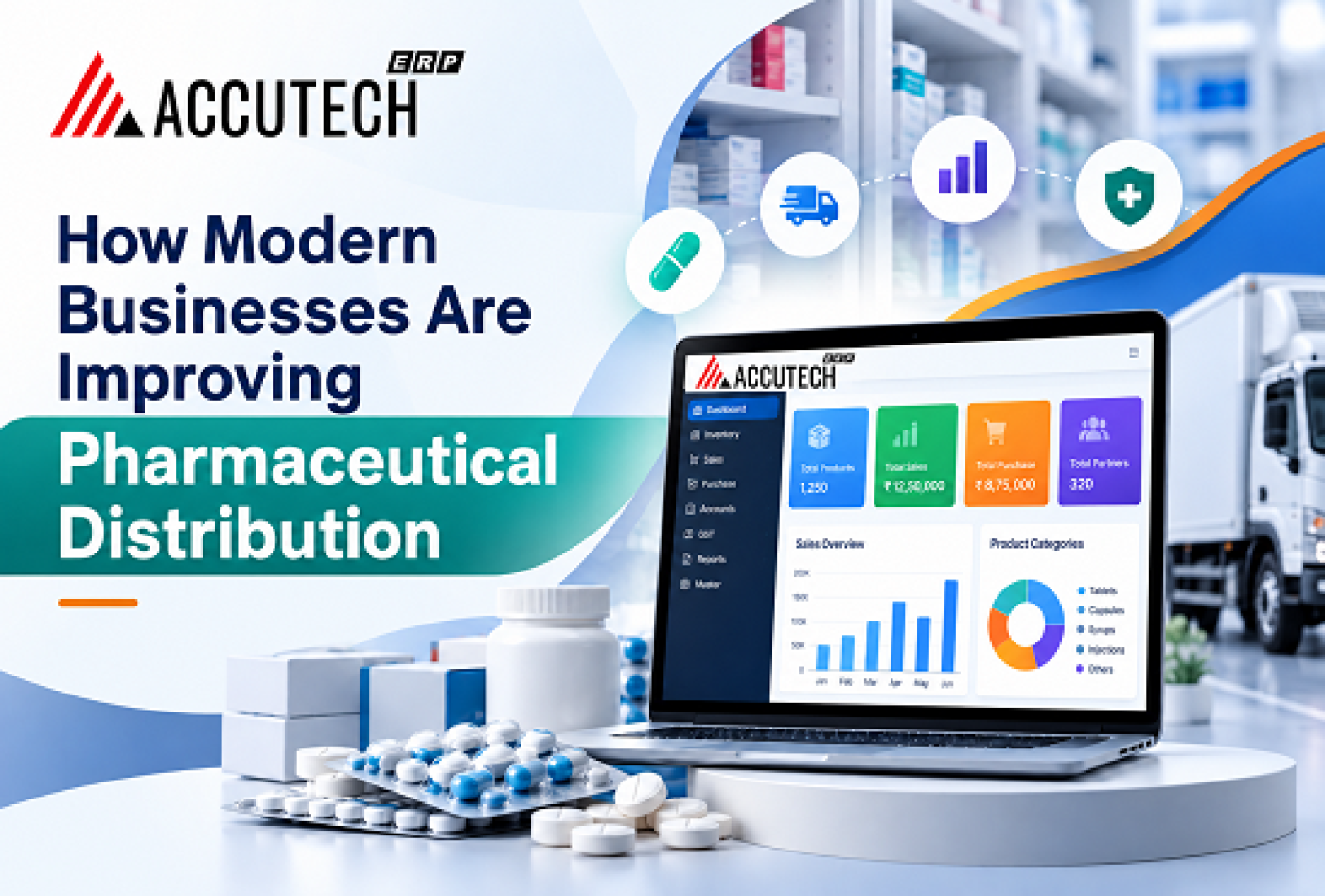
How Modern Businesses Are Improving Pharmaceutical Distribution
The pharmaceutical industry in India is experiencing unprecedented growth, with the sector valued at over ₹5 lakh crore. At the heart of this expansion lies the Pharma PCD (Propaganda Cum Distribution) business model, which has revolutionized how medicines reach patients across remote and urban areas. However, managing a Pharma PCD operation presents unique challenges: tracking thousands of product variants, managing distributor networks, ensuring GST compliance, and maintaining profitability across multiple channels.
This is where Pharma PCD ERP Software emerges as a game-changer. Modern pharmaceutical distributors are no longer relying on manual spreadsheets and fragmented processes. Instead, they're adopting comprehensive ERP solutions that integrate inventory management, billing, accounting, and compliance reporting into a single unified platform. This transformation isn't just about digital adoption, it's about gaining competitive advantage in an increasingly complex market.
In this article, we'll explore how pharmaceutical ERP solutions are revolutionizing pharmaceutical distribution, what features make them indispensable for growing businesses, and why thousands of Indian pharmaceutical companies are making the switch to integrated solutions.
Understanding Pharma PCD and Modern Distribution Challenges
The Pharma PCD model represents a unique business structure in the Indian pharmaceutical landscape. Unlike traditional distribution, PCD allows pharmaceutical manufacturers to grant marketing and distribution rights to franchisees within specific geographical territories. These partners act as authorized distributors, promoting the company's products and supplying them to retailers, hospitals, and chemists.
Why Pharma PCD Business Model Has Become Essential
Several factors have made pharmaceutical PCD ERP solutions adoption critical for modern distribution:
- Low Initial Investment: Unlike manufacturing, PCD franchises require minimal capital.
- Exclusive Territory Rights: Partners receive monopoly rights in assigned regions.
- Ready-Made Product Portfolio: Franchisees inherit complete product catalogs.
- Market Penetration: Faster expansion into rural and semi-urban areas.
Critical Operational Challenges in Pharma PCD Distribution
Managing Pharma PCD operations at scale presents serious challenges requiring modern pharmaceutical business management systems:
Inventory Complexity: Managing multiple products, batch numbers, expiry dates, and packing sizes without proper software for pharmaceutical company operations causes significant waste.
Billing Challenges: Handling orders from hundreds of retailers requires advanced pharma ERP capabilities.
GST Compliance: Precise tax filing requires integrated systems that modern pharmaceutical distribution software provides.
Financial Visibility: Real-time tracking of profitability needs dedicated pharmaceutical manufacturing ERP systems.
What Is Pharma PCD ERP Software?
Pharma PCD ERP Software is a comprehensive business management solution specifically designed for pharmaceutical distribution companies. This pharmaceutical management system integrates inventory, billing, accounting, and compliance into one platform.
Five Core Modules of Pharma PCD ERP Systems
- Inventory Management: Tracks products, HSN codes, batches, and expiry dates critical for pharmaceutical manufacturing ERP systems.
- Sales & Billing: Quick invoice generation with payment tracking.
- Purchase Management: Supplier tracking and order management.
- Accounting: Ledgers, trial balances, and financial statements.
- GST Compliance: Automated GSTR filing and tax calculation.
How Pharma PCD ERP Systems Differ From Generic Accounting Software
Generic accounting software treats all businesses the same. Pharmaceutical ERP systems are purpose-built for pharmaceutical distribution with batch tracking, HSN classification, multi-location support, and party-specific pricing features essential for software for pharmaceutical company success.
Key Features That Transform Pharmaceutical Distribution
The Best Pharma PCD ERP Software offers features specifically designed for pharmaceutical distribution challenges:
Real-Time Inventory Control with Batch Tracking
Pharmaceutical ERP software provides batch tracking, expiry monitoring, stock valuation methods, and multi-location inventory management essential features that pharmaceutical manufacturing ERP systems must include.
Comprehensive Sales and Purchase Reporting
Party-wise sales, product analytics, staff performance metrics, and purchase order tracking help businesses using software for pharmaceutical company operations make data-driven decisions.
Integrated GST Compliance and Tax Management
Automatic GSTR-1 generation, GSTR-2A reconciliation, GSTR-3B calculation, and TDS computation modern pharma ERP systems handle GST compliance automatically, reducing errors and compliance costs by 40-50%.
Advanced Financial Reporting and Analysis
Real-time dashboards, profitability analysis, debtor/creditor aging, and cash flow management help pharmaceutical manufacturing ERP users understand business performance instantly.
How Software for Pharmaceutical Company Operations Improves Results
The transition to modern pharmaceutical ERP software delivers transformative improvements:
1. Reduced Manual Errors
Manual data entry has 0.5-1% error rates. Pharmaceutical PCD management software reduces errors by 95%, preventing invoice mistakes and billing disputes.
2. Faster Billing and Invoice Processing
What took 2-3 hours now takes minutes. Pharmaceutical manufacturing ERP systems generate professional invoices automatically with all required details including HSN codes and tax calculations.
3. Improved Stock Management
Batch and expiry tracking prevent wastage. Businesses report 10-20% improvements in inventory turnover after implementing integrated pharmaceutical ERP software.
4. Real-Time Business Intelligence
Modern software for pharmaceutical company operations provides real-time dashboards showing daily sales, product performance, and profit margins.
5. Seamless GST Compliance
Pharmaceutical ERP systems handle GSTR filing with one click. Monthly returns take 2-3 hours instead of 3-4 days, reducing compliance costs by 40-50%.
6. Better Partner Management
Partner portals in pharmaceutical management software provide transparency and improve relationships with PCD franchisees.
Pharmaceutical Manufacturing ERP and Tax Compliance
GST compliance is essential in pharmaceutical distribution. Non-compliance results in penalties up to 100% of tax. Modern pharmaceutical ERP solutions ensure compliance:
Tax Rate Assignment
Each product gets its HSN code and GST rate. The software applies correct tax automatically through pharmaceutical manufacturing ERP capabilities.
The Complete GST Filing Workflow
Step 1: Data Collection - Invoices recorded throughout the month
Step 2: GSTR-1 Generation - Auto-generated from sales invoices
Step 3: GSTR-2A Download - System downloads supplier GSTR-1 data
Step 4: ITC Reconciliation - Matches purchases with GSTR-1
Step 5: GSTR-3B Filing - Tax calculated and filed automatically
Real-World Benefits and Cost Savings
Implementing Pharma PCD ERP Software delivers measurable ROI:
Cost Savings Through Automation
For a distributor processing 5,000 invoices monthly: Manual processing = 160 hours/month. ERP-based = 15 hours/month. Monthly savings = 145 hours × ₹500/hour = ₹72,500. Annual savings = ₹8,70,000.
Reducing Inventory Carrying Costs
With software for pharmaceutical company operations, distributors reduce inventory by 15-20%. Freed-up working capital: ₹7,50,000. Interest savings (12% annual): ₹90,000 annually.
Preventing Wastage
Current wastage (3%) = ₹30 lakh. Post-ERP wastage (0.8%) = ₹8 lakh. Annual savings = ₹22 lakh from batch tracking in pharmaceutical ERP software.
Improved Cash Flow
Reducing Days Sales Outstanding from 45 to 30 days frees up ₹41.1 lakh in working capital for ₹10 crore annual sales.
Choosing the Best Pharma PCD ERP Software for Your Business
Not all pharmaceutical ERP solutions are equal. Evaluate these factors:
Essential Features to Look For
Feature | Why It Matters | What to Check |
Batch Tracking | Prevents expired stock sales | Multiple batches per SKU |
GST Integration | Ensures tax compliance | GSTR-1, GSTR-3B auto-filing |
Multi-Location Support | Manages multiple warehouses | Real-time sync across locations |
Party-Wise Pricing | Variable rates for customers | Rate cards and schemes |
Reporting & Analytics | Data-driven decisions | 50+ standard reports |
Cloud vs. Desktop Solutions
Cloud-Based Pharmaceutical ERP Software: Access anywhere, automatic updates, lower upfront costs, scalable.
Desktop ERP: Full data control, works offline, but requires high initial investment.
Common Implementation Mistakes to Avoid
1. Inadequate Data Cleanup Before Migration
Clean your data before implementing a pharmaceutical PCD ERP system. Validate product codes, correct HSN mappings, and reconcile opening balances.
2. Insufficient User Training
Software for pharmaceutical company operations requires proper training. Invest in comprehensive onboarding and role-specific guides.
3. Trying to Run Old Processes in New Systems
Re-engineer your processes to leverage modern pharmaceutical ERP capabilities rather than constraining it with old procedures.
4. Ignoring Change Management
Employees resist change. Identify power users as ERP champions to win over skeptics.
5. Not Customizing for Unique Needs
Discuss customizations with vendors, but avoid excessive modifications that complicate future upgrades.
6. Overlooking Security
Ensure role-based access controls, data encryption, and compliance with security standards (ISO 27001, SOC 2).
Future Trends in Pharmaceutical Distribution Technology
AI and Machine Learning in Forecasting
AI-powered pharmaceutical manufacturing ERP systems will predict demand based on patterns and suggest product recommendations.
Blockchain for Track-and-Trace
Blockchain integration into pharmaceutical ERP systems ensures transparent, immutable records preventing counterfeiting.
Mobile-First Operations
Field teams need mobile access to order information and inventory status through robust pharmaceutical ERP apps.
E-Commerce Integration
Future pharmaceutical business management systems will integrate with e-commerce platforms for omnichannel selling.
Frequently Asked Questions
1. What is the best Pharma PCD ERP software in India?
Look for software offering batch tracking, GST integration, multi-location support, and strong customer support. Accutech ERP is a trusted choice, offering cloud-based flexibility and dedicated support. Evaluate multiple vendors and request demos.
2. How much does pharmaceutical PCD ERP software cost?
Cloud-based solutions cost ₹2,000-₹10,000/month depending on users and features. On-premise solutions range from ₹5-₹50 lakh as one-time license fee plus annual maintenance.
3. How long does implementation take?
Implementation typically takes 2-6 months depending on complexity. Small businesses may go live in 4-6 weeks.
4. Can a pharmaceutical PCD ERP system integrate with existing systems?
Modern ERP systems support API-based integrations with existing software including banking systems and e-commerce platforms.
5. What training is required?
Different roles need different training. Plan 20-40 hours per user for thorough understanding of pharmaceutical manufacturing ERP features.
6. How does pharmaceutical PCD ERP software help with GST?
The software auto-captures GST rates, calculates SGST/CGST, maintains ITC records, and auto-generates GSTR returns. Tasks taking days now take hours.
7. Can small pharmaceutical businesses benefit?
Yes. Even small businesses benefit from automated invoicing, inventory tracking, and GST compliance. Cloud solutions are ideal for small businesses due to low setup costs.
8. What is the ROI?
Most businesses see ROI within 12-18 months. Mid-sized distributors save ₹8-₹12 lakh annually, recovering a ₹3-₹5 lakh investment in the first year.
9. Cloud or on-premise?
Cloud is better for flexibility, lower upfront costs, and automatic updates. Most modern pharmaceutical ERP users choose cloud.
10. How does a Pharma PCD ERP system prevent stock expiry?
The system tracks batch numbers and expiry dates, alerting when stock approaches expiration. This allows businesses to move expiring stock before wastage.
Conclusion:
The pharmaceutical distribution landscape is characterized by increasing complexity, tighter regulations, and rising customer expectations. Businesses relying on manual processes fall behind.
Pharma PCD ERP Software has become indispensable for pharmaceutical distributors. It transforms inventory management, billing processes, tax compliance, and strategic decision-making. From preventing wastage to automating GST filing, benefits are substantial and measurable.
The investment pays for itself within 12-18 months through operational efficiency gains, reduced errors, and better visibility. Whether managing single distribution centers or coordinating multiple PCD partners, cloud-based pharmaceutical ERP software like Accutech ERP provides functionality and flexibility for sustainable success.
The question is not whether your business needs an ERP, it's which software for pharmaceutical company operations is right for you. Schedule a demo today. See how automation, integration, and intelligent reporting revolutionize your business. The pharmaceutical industry is moving toward digital-first operations. Ensure your business doesn't get left behind.