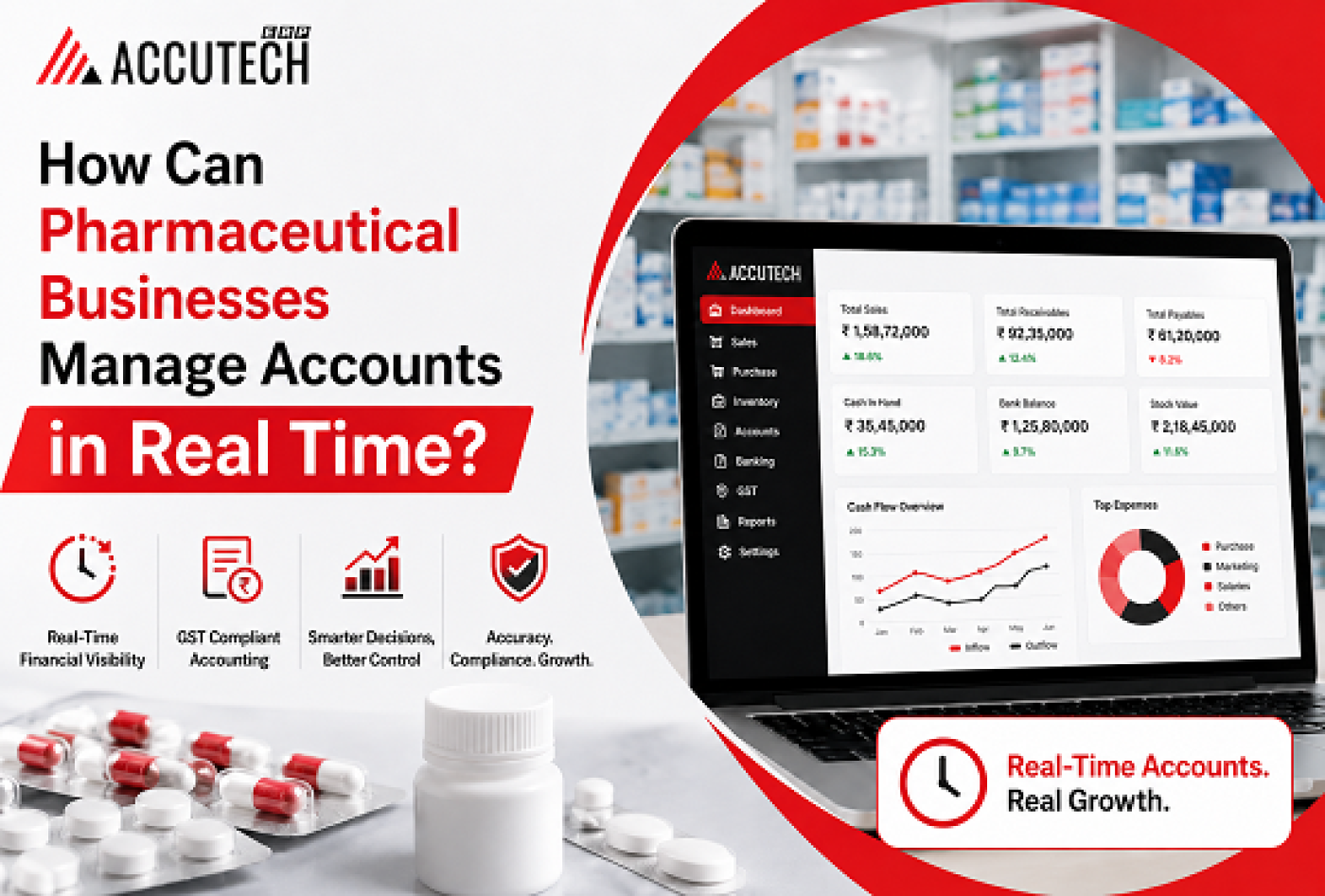
The pharmaceutical industry operates under intense regulatory scrutiny, complex supply chains, and tight profit margins. Every transaction from raw material procurement to finished product delivery must be tracked, documented, and reported with absolute accuracy. This is where pharmaceutical accounting software becomes indispensable.
Gone are the days when pharmaceutical businesses could rely on spreadsheets and manual bookkeeping. Today's competitive landscape demands real-time visibility into financial operations. Whether you're managing a multi-location distribution network or overseeing manufacturing operations, software for pharmaceutical industry needs must provide instant access to account balances, transaction history, tax compliance status, and profitability metrics.
Real-time account management isn't just a convenience, it's a business necessity. When you can access current account information instantly, you can make faster decisions, identify cash flow issues before they become crises, ensure GST compliance automatically, and improve overall operational efficiency. This comprehensive guide explores how pharmaceutical businesses can leverage the solution and pharmaceutical manufacturing ERP software to transform their financial management.
Understanding Pharmaceutical Accounting Software: Definition and Scope
This specialized software refers to specialized digital solutions designed to manage the unique financial and operational requirements of the pharmaceutical industry. Unlike generic accounting tools, this category of software addresses the specific challenges faced by pharmaceutical businesses, including:
- Complex batch tracking and expiration management
- Regulatory compliance (GST, excise duties, environmental norms)
- Multi-location inventory and accounting
- Distributor and retailer relationship management
- Temperature-controlled storage requirements
- Pharmaceutical manufacturing process accounting
- License and certification tracking
The software integrates with inventory management, billing systems, and compliance tools to create a unified platform where all financial data flows seamlessly. When implemented correctly, the system allows you to see your entire financial picture at any given moment, making data-driven decisions easier and faster.
The Critical Need for Real-Time Financial Management in Pharma Business
Pharmaceutical businesses face pressures that other industries rarely encounter. You're managing products that must maintain specific storage conditions, tracking medicines that have limited shelf lives, ensuring compliance with stringent government regulations, and often serving critical healthcare channels with tight delivery schedules.
Real-time account management directly addresses these challenges:
Cash Flow Visibility
With the accounting system, you know exactly how much cash is available in each account at any moment. This prevents overdraft situations and helps optimize working capital. You can see pending invoices, received payments, and upcoming expenses in real time, allowing you to plan better and negotiate better payment terms with suppliers.
Inventory Valuation
Pharmaceutical inventory is expensive and time-sensitive. Real-time valuation through pharmaceutical manufacturing ERP software ensures you always know your stock value, identifies slow-moving products, and alerts you to expiring medicines before losses occur. This directly impacts your bottom line.
Regulatory Compliance
Tax authorities require real-time GST compliance data. With the right accounting software, you can generate GST-compliant invoices instantly, maintain audit trails automatically, and file GSTR returns with confidence. Non-compliance can result in penalties that far exceed software costs.
Key Features of Professional Pharmaceutical Accounting Software
Not all these accounting solutions are created equal. Enterprise-grade solutions should include these essential features:
1. Multi-Location Accounting & Consolidated Reporting
Pharmaceutical businesses typically operate across multiple locations manufacturing units, warehouses, distribution centers, and retail outlets. Professional software for the pharmaceutical industry must consolidate accounting data from all locations while maintaining location-specific records. This enables you to view company-wide financials while drilling down into location-specific performance.
2. Real-Time Inventory-Accounting Integration
Every inventory transaction should instantly update financial accounts. When you sell medicines, the system should simultaneously update stock levels, recognize revenue, adjust accounts receivable, and record cost of goods sold. This real-time integration prevents discrepancies and ensures financial accuracy.
3. Batch and Expiry Tracking
Pharmaceutical manufacturing ERP software must track medicines by batch number and expiration date. This isn't just for compliance it directly impacts financial reporting. Expired inventory must be written off, and this needs to happen automatically when expiry dates are reached.
4. GST and Tax Compliance
The accounting software must generate GST-compliant invoices, maintain HSN/SAC codes, calculate ITC accurately, and prepare GSTR returns automatically. The software should track tax-related transactions separately and flag any compliance issues in real time.
5. Bank Reconciliation and Payment Processing
Automated bank reconciliation saves hours of manual work each month. Professional software connects to your bank accounts, downloads transactions, and matches them with recorded entries. This identifies discrepancies immediately and ensures your accounting records always reflect actual bank balances.
6. Real-Time Financial Reporting
Generate balance sheets, profit and loss statements, cash flow statements, and custom reports on demand. With this accounting platform, these reports reflect current data, not historical snapshots. This supports faster decision-making and better financial analysis.
Benefits of Real-Time Account Management for Pharmaceutical Businesses
Implementing this accounting solution delivers tangible business benefits:
Improved Decision-Making: Real-time data enables managers to make informed decisions quickly. Should you order more inventory? Can you approve that capital expense? These questions get answered faster with instant access to financial data.
Reduced Compliance Risk: The software automates compliance, reducing human error and ensuring you never miss filing deadlines or regulatory requirements.
Lower Administrative Costs: Automation reduces manual data entry, reconciliation work, and report generation. Your finance team becomes more productive, allowing you to accomplish more with the same resources.
Better Cash Management: Real-time visibility into cash positions helps prevent cash crunches, optimize working capital, and negotiate better terms with suppliers.
Enhanced Inventory Efficiency: Pharmaceutical manufacturing ERP software tracks expiring stock automatically, preventing inventory losses and improving margins.
Scalability: As your pharmaceutical business grows, the software scales with you. Add locations, products, and users without worrying about system limitations.
How Pharmaceutical Manufacturing ERP Software Streamlines Entire Operations
While pharmaceutical accounting software focuses specifically on financial management, pharmaceutical manufacturing ERP software extends this capability across your entire operation. ERP (Enterprise Resource Planning) systems integrate accounting, inventory, procurement, manufacturing, and sales into one cohesive platform.
For pharmaceutical manufacturing companies, this integration is critical:
Manufacturing Integration: Production orders automatically create purchase orders for raw materials. As medicines are manufactured, costs flow into the accounting system. Finished goods inventory is valued accurately based on actual production costs.
Quality Control Integration: Batch testing results link to inventory records and accounting entries. If a batch fails quality tests, it's automatically removed from saleable inventory and marked for disposal with appropriate financial write-offs.
Distribution Management: Manufacturing ERP software tracks product movement from production to distribution centers to customers. This visibility ensures you always know where your products are and when revenue should be recognized.
License and Certification Tracking: The software maintains records of product licenses, manufacturing certifications, and regulatory approvals. This prevents selling unlicensed products and ensures compliance.
Step-by-Step Implementation Guide for Pharmaceutical Accounting Software
Implementing this accounting software requires careful planning:
Step 1: Assess Current Processes
Document all existing accounting processes, identify pain points, and determine what functionality you truly need. Meet with your finance team to understand their biggest challenges.
Step 2: Select Appropriate Software
Choose software for the pharmaceutical industry that specifically addresses your identified needs. Evaluate solutions like Accutech ERP, which offers specialized features for pharmaceutical businesses including GST compliance, batch tracking, and multi-location management.
Step 3: Plan Data Migration
Create a detailed migration plan for transferring historical data. This includes customer records, supplier information, product masters, and account balances. Professional implementation should include data validation to ensure accuracy.
Step 4: Configure the System
Set up your chart of accounts, define user roles and permissions, configure GST settings, and customize reports. Work with implementation experts to ensure the system matches your business processes.
Step 5: User Training
Conduct comprehensive training for all users. Different roles (finance staff, sales team, warehouse personnel) need different training levels. Invest in training inadequate training is a primary reason for implementation failures.
Step 6: Go Live with Parallel Running
Run the new system alongside your old system for a period (typically 1-2 months). This allows you to validate that the new system produces accurate results before fully transitioning.
Step 7: Monitor and Optimize
After go-live, closely monitor system performance and data accuracy. Gather feedback from users and implement improvements. Use this period to optimize processes and ensure everyone is using the system effectively.
Best Practices for Real-Time Pharmaceutical Account Management
Successful implementation of pharmaceutical accounting software requires adopting best practices:
Establish Clear Data Entry Standards: Inconsistent data entry undermines system effectiveness. Establish rules for how products are named, how locations are coded, and how transactions are categorized. Ensure all users follow these standards strictly.
Reconcile Regularly: Don't wait for month-end to reconcile accounts. Use the software to reconcile daily or weekly. This identifies discrepancies quickly when they're easier to trace and fix.
Monitor KPIs in Real-Time: Set up dashboards that track key performance indicators Days Sales Outstanding (DSO), inventory turnover, gross margin, etc. Review these daily to catch problems early.
Maintain User Access Controls: Restrict access to financial data based on roles. While transparency is important, preventing unauthorized access protects against fraud and errors.
Schedule Regular Software Updates: Keep pharmaceutical manufacturing ERP software current. Updates often include regulatory compliance enhancements and performance improvements.
Backup Data Religiously: Implement automated daily backups. Pharmaceutical business data is critical losing it could be catastrophic.
Common Mistakes to Avoid When Implementing Accounting Software
Learning from others' mistakes can save you significant time and money:
Selecting Software Too Quickly: Don't choose this type of accounting software based on price alone or quick sales pitches. Thoroughly evaluate multiple options, request demos, and check references from pharmaceutical industry users.
Inadequate Data Cleaning: Poor historical data causes ongoing problems. Before migrating data, clean it thoroughly. Remove duplicate customer records, validate account balances, and verify opening inventory quantities.
Underestimating Change Management: The biggest obstacle isn't the software it's user resistance. Involve end-users early, communicate frequently, and provide ample training and support.
Overcomplicating Configuration: Don't configure every possible feature. Start with essential functionality and gradually add complexity. Simpler systems are easier to maintain and use correctly.
Ignoring Integration Needs: The accounting system shouldn't exist in isolation. It must integrate with banking systems, e-commerce platforms, and other business applications you use.
Poor Post-Implementation Support: Don't assume implementation ends at go-live. Budget for ongoing support, especially in the first 6 months. Problems will arise, and quick resolution is essential.
Frequently Asked Questions
Q1: How is pharmaceutical accounting software different from general accounting software?
This software includes industry-specific features like batch and expiry tracking, GST compliance for medicines, temperature-controlled storage management, license tracking, and distributor relationship management. General accounting software lacks these critical pharmaceutical-specific capabilities.
Q2: Can the software handle multiple currencies and locations?
Yes, the platform supports multi-location operations and can handle multiple currencies for pharmaceutical businesses with international operations. Accutech ERP, for example, manages multiple businesses and locations from a single platform.
Q3: How does real-time accounting help with GST compliance?
Real-time accounting software generates GST-compliant invoices automatically, maintains a complete transaction record, calculates Input Tax Credit (ITC) accurately, and prepares GSTR returns with current data. This eliminates manual consolidation and reduces compliance errors.
Q4: What is the typical cost of implementing the software?
Costs vary based on company size and features. Cloud-based accounting software typically involves a monthly subscription per user plus implementation and training costs. ROI often comes within 6-12 months through improved efficiency and error reduction.
Q5: How long does it take to implement pharmaceutical manufacturing ERP software?
Small pharmaceutical businesses might go live in 2-3 months, while larger operations with complex processes may require 3-6 months. This includes planning, data migration, configuration, testing, training, and parallel running phases.
Q6: Can the software be customized for specific business processes?
Yes, professional solutions offer configuration and customization options. However, it's better to adapt your processes to the software rather than over-customizing. Well-designed software for pharmaceutical industry already includes features for most standard processes.
Q7: Is data secure in cloud-based accounting software?
Reputable cloud accounting systems use enterprise-grade security including encryption, regular backups, access controls, and compliance with data protection regulations. Cloud solutions often offer better security than on-premise systems.
Q8: Can the software integrate with banking systems?
Yes, modern accounting software integrates with major Indian banks for automated transaction downloads and reconciliation. This eliminates manual bank reconciliation work and improves accuracy.
Q9: What kind of reporting does the software provide?
Professional accounting software generates standard financial reports (balance sheet, income statement, cash flow), tax reports (GST returns, GSTR statements), operational reports (sales, purchase, inventory), and custom reports tailored to your needs. All reports reflect real-time data.
Q10: How does the accounting software handle batch and expiry tracking?
Pharmaceutical manufacturing ERP software automatically tracks products by batch number and expiration date. When medicines expire, the system automatically flags them for disposal and records the financial write-off, preventing revenue recognition on expired products.
Conclusion:
The pharmaceutical industry's complexity demands more than traditional accounting methods. Real-time account management through specialized accounting software isn't a luxury it's a necessity for modern pharmaceutical businesses competing in today's market.
Whether you're a pharmaceutical manufacturer managing complex production and quality control, a distributor handling multiple locations and product types, or a retailer serving healthcare consumers, implementing pharmaceutical manufacturing ERP software and the accounting system will transform how you manage finances, ensure compliance, and make decisions.
The investment in proper software for the pharmaceutical industry pays dividends through improved accuracy, reduced compliance risk, faster decision-making, and better inventory management. Start with a clear assessment of your needs, choose software designed specifically for pharmaceutical businesses, plan implementation carefully, and invest in comprehensive training.
Ready to modernize your pharmaceutical business accounting?
Accutech ERP offers specialized pharmaceutical accounting software with real-time reporting, GST compliance, inventory management, and multi-location support. Request a free demo today to see how Accutech ERP can transform your pharmaceutical business operations.