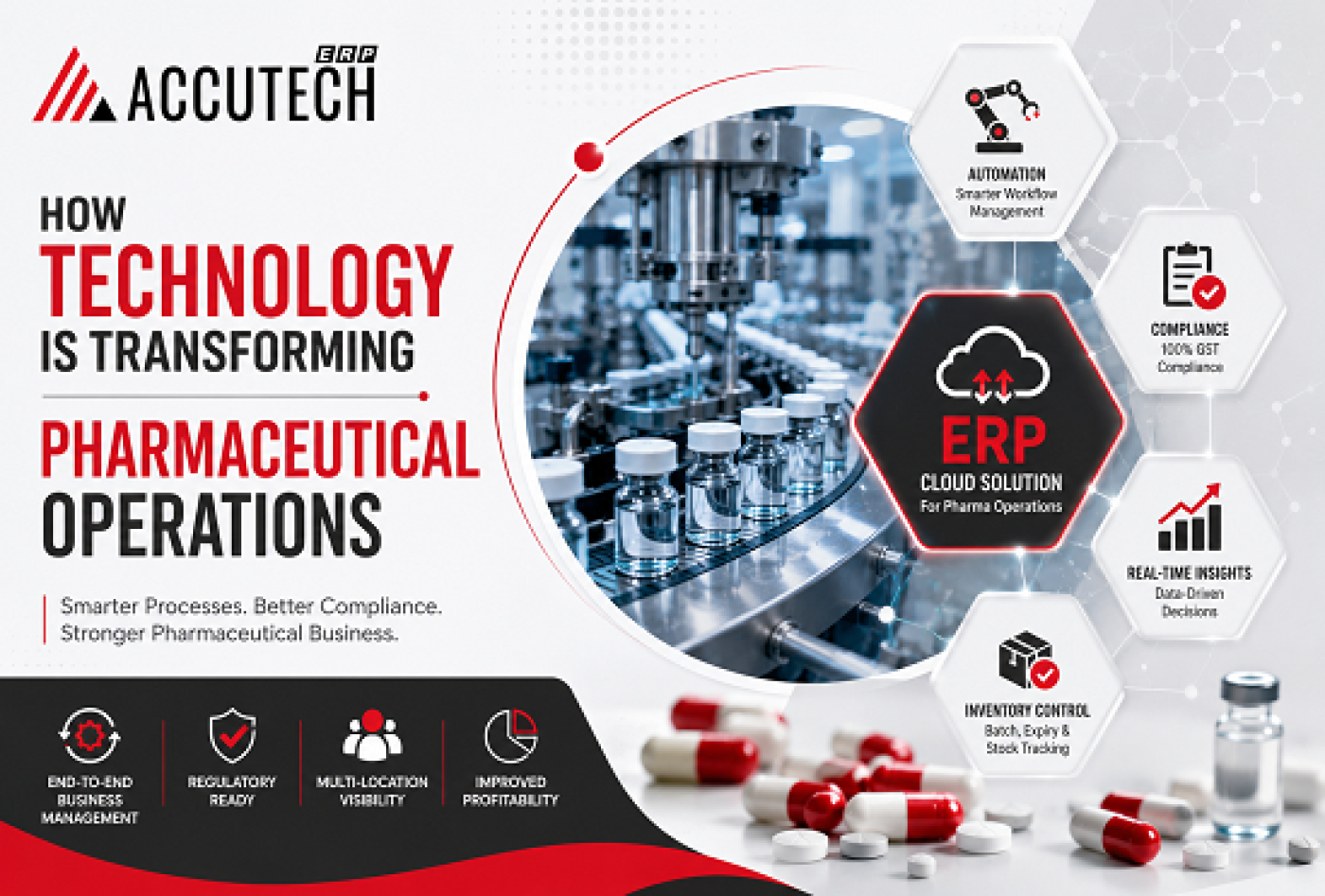
The pharmaceutical industry stands at a critical inflection point. In 2026, manual spreadsheets, disconnected systems, and fragmented processes no longer cut it for companies competing in the modern healthcare market. Pharmaceutical distributors, PCD franchise businesses, and manufacturing operations face unprecedented pressure to scale efficiently while maintaining strict regulatory compliance, managing complex supply chains, and controlling operational costs.
This is where Pharma PCD ERP software becomes essential infrastructure, not a luxury upgrade.
For decades, pharmaceutical companies relied on traditional methods: paper records, multiple software systems, manual invoicing, and time-consuming GST compliance procedures. But the landscape has transformed dramatically. Digital-first operations, cloud computing, real-time data analytics, and AI-driven insights have become industry standards. The question is no longer whether your pharmacy needs ERP software for pharmaceutical company operations; it's which solution will best serve your business growth and operational efficiency.
This comprehensive guide explores how pharmaceutical accounting software and modern pharma PCD ERP solutions are revolutionizing business operations, reducing costs, improving compliance, and enabling sustainable growth in the pharmaceutical sector.
Understanding Pharmaceutical Operations
The pharmaceutical industry in 2026 operates under a complex web of regulatory requirements, competitive pressures, and evolving customer expectations. Traditional business models no longer provide the agility, transparency, and efficiency that modern pharmacies, distributors, and franchise operations require.
Key Operational Challenges:
- Manual inventory tracking leading to stock discrepancies and expired products
- Complex GST compliance requirements with strict filing deadlines
- Multi-location management without real-time visibility
- Delayed financial reporting and profitability analysis
- Billing inaccuracies leading to customer disputes
- Supply chain fragmentation and procurement inefficiency
A typical pharmaceutical distributor or PCD franchise processes hundreds of transactions daily, manages thousands of SKUs across multiple batches, tracks expiry dates for regulatory compliance, and must generate GST-compliant invoices instantly. The complexity multiplies with each expansion into new territories or product categories.
What Is Modern ERP Software for Pharma?
Pharma PCD ERP Software is a comprehensive business management system designed specifically for pharmaceutical companies, franchisees, and distributors. The term 'PCD' stands for 'Propaganda-Cum-Distribution,' a business model popular in India's pharmaceutical industry where companies distribute products under an established brand name with exclusive territorial rights.
A modern integrated platform combines multiple business functions into a single, unified ecosystem:
- Inventory Management: Track medicines, supplements, and healthcare products across multiple locations with batch-level precision and expiry date monitoring.
- Billing and Invoicing: Generate accurate, GST-compliant invoices instantly with automatic tax calculations.
- Accounting: Automate financial record-keeping, ledger management, and book reconciliation.
- Purchase and Sales Management: Track orders, manage suppliers, control purchase workflows, and monitor sales performance.
- GST and Tax Compliance: Automate GST returns (GSTR1, GSTR2A, GSTR3B) and tax calculations.
- Reporting and Analytics: Generate comprehensive business insights with dashboards, profitability reports, and trend analysis.
Why Businesses Choose Modern Solutions:
Organizations searching for advanced business management tools recognize that disconnected systems create inefficiency, errors, and missed growth opportunities. A unified platform eliminates data silos, improves decision-making, and scales with business expansion.
The Technology Transformation of Pharmaceutical Business
The pharmaceutical industry is undergoing a profound digital transformation. What was once optional is now essential for competitive survival.
Digital Transformation Drivers:
- Cloud Computing: Cloud-based solutions allow pharmaceutical teams to access critical business data from anywhere, enabling remote work, multi-location management, and real-time collaboration.
- Real-Time Data Analytics: Modern pharmaceutical accounting software provides instant visibility into inventory levels, sales trends, profitability metrics, and customer behavior enabling data-driven decisions.
- Automation: Repetitive tasks like invoice generation, GST compliance, inventory tracking, and financial reconciliation are now automated, freeing teams to focus on strategic initiatives.
- Mobile Access: Enterprise systems with mobile capabilities allow field teams, sales representatives, and distributors to process orders, check inventory, and submit reports on the go.
- AI and Machine Learning: Predictive analytics help forecast demand, optimize inventory levels, identify slow-moving products, and suggest pricing strategies.
- Integration Capabilities: Modern solutions seamlessly integrate with banks, e-commerce platforms, digital payment systems, and logistics providers.
Key Benefits of Implementing Enterprise Solutions
Organizations implementing dedicated business management systems report transformative improvements:
Benefit | Impact |
Operational Efficiency | 15-20% improvement in operational speed; reduced manual data entry by 70% |
Error Reduction | Eliminates billing errors, inventory discrepancies, and compliance violations |
Cost Savings | Lower administrative costs, reduced inventory waste, minimized compliance penalties |
Scalability | Easily expand to new locations, product categories, and customer segments |
Compliance | Automated GST returns, regulatory compliance, and audit trail maintenance |
Better Decisions | Real-time analytics for informed business planning and strategy |
Specific Impact on Profitability:
Companies implementing pharmaceutical accounting software report 20-30% improvement in gross margins through better inventory control and reduced wastage. Real-time profitability analysis allows businesses to identify high-margin products, optimize pricing strategies, and eliminate unprofitable operations. Multi-location visibility enables centralized purchasing at better rates and prevents overstocking.
Critical Features Every Pharmaceutical System Should Include
When evaluating enterprise solutions, several features are non-negotiable:
A. Batch and Expiry Tracking
Medicines are tracked by batch number and expiry date. A robust system automatically flags near-expiry stock, prevents sale of expired products, and generates expiry reports for proactive management. This feature alone can save thousands in write-offs and compliance issues.
B. Multi-Store and Multi-Location Management
Software for pharmaceutical company operations must support unlimited store locations with real-time inventory synchronization. This enables centralized control while providing local autonomy, better stock allocation, and consolidated reporting.
C. GST and Tax Compliance Automation
GST compliance is complex. Advanced solutions automatically calculate GST on each transaction, maintain compliance records, and generate GSTR1, GSTR2A, and GSTR3B returns with a few clicks.
D. Real-Time Inventory Visibility
Stock visibility across locations, warehouses, and stores prevents stockouts and overstocking. Barcode and RFID integration speeds up receiving and counting processes.
E. Advanced Reporting and Analytics
Comprehensive reports on sales, purchases, inventory, profitability, outstanding balances, and staffing performance enable data-driven decisions. Customizable dashboards and instant report generation save hours of manual analysis.
GST Compliance and Regulatory Management
GST compliance is among the biggest operational challenges for pharmaceutical businesses in India. Non-compliance can result in penalties, audit notices, and reputational damage.
How Integrated Systems Simplify GST:
- Automatic Tax Calculation: Every invoice automatically calculates applicable GST based on product classification, customer type, and transaction nature.
- GSTR Filing: Business management tools automatically prepare GSTR1 (sales), GSTR2A reconciliation, and GSTR3B (tax liability) filings, eliminating manual data compilation.
- Credit Management: Track and reconcile Input Tax Credit (ITC) automatically, ensuring businesses claim all eligible credits.
- Compliance Reports: Generate detailed GST compliance reports, audit trails, and documentation for regulatory inspections.
- Schedule H Compliance: For controlled pharmaceuticals, the system tracks and reports Schedule H medicines as per regulatory requirements.
Real-World Impact:
A pharmaceutical distributor using manual processes might spend 15-20 hours monthly on GST compliance and face audit penalties of 15-20% of unpaid taxes. With modern digital tools, the same compliance task takes 1-2 hours, and penalties are virtually eliminated through automated accuracy.
Inventory and Stock Management Excellence
Inventory is the lifeline of pharmaceutical businesses. Poor inventory management leads to stockouts, customer dissatisfaction, and significant write-offs from expired products.
Advanced Features in Modern Systems:
- FIFO/FEFO Logic: First-In-First-Out (FIFO) or First-Expiry-First-Out (FEFO) inventory allocation ensures products are sold in the right order, minimizing expiry losses.
- Reorder Point Automation: The system automatically suggests purchase orders when inventory falls below defined thresholds, preventing stockouts.
- Demand Forecasting: AI-powered forecasting predicts future demand based on historical sales patterns, seasonal trends, and market data.
- Physical Stock Auditing: Reconcile physical inventory with system records, identify discrepancies, and maintain accuracy.
- Low Stock and Expiry Alerts: Real-time notifications alert managers to slow-moving products and near-expiry medicines.
Profitability Impact:
Pharmaceutical companies report 10-15% reduction in inventory carrying costs and 5-10% improvement in inventory turnover with modern implementation. Expired product waste decreases by 30-40%, translating to significant cost savings.
Financial Reporting and Profitability Analysis
Financial clarity is essential for growth. Advanced business platforms transform raw transaction data into actionable business insights.
Key Financial Reports Available:
- Profit & Loss Statements: Instant P&L reports by product, customer, location, or sales representative show profitability at every level.
- Balance Sheet: Complete balance sheet with asset, liability, and equity breakdowns for regulatory and strategic purposes.
- Product Profitability: Identify high-margin products and unprofitable items, enabling strategic product mix optimization.
- Customer Profitability: Analyze profitability by customer, territory, or sales channel to optimize business focus.
- Debtor and Creditor Aging: Track outstanding receivables and payables with aging analysis for better cash flow management.
- Cash Flow Forecasting: Project future cash positions based on historical patterns and outstanding balances.
Overcoming Implementation Challenges
While modern business management solutions deliver tremendous value, implementation requires careful planning and change management.
Common Implementation Challenges:
- Data Migration: Transferring legacy data from old systems can be complex. Working with experienced implementation partners ensures clean data migration.
- User Adoption: Team resistance to change is natural. Comprehensive training and gradual rollout minimize disruption.
- Customization: Some businesses require customizations. Ensure the vendor offers flexibility without compromising core functionality.
- Integration Challenges: Connecting systems with existing banking, payment, and logistics systems requires technical expertise.
Best Practices for Successful Implementation:
- Start with a pilot implementation in one location before full rollout.
- Invest in comprehensive training for all user levels.
- Designate power users who become internal champions.
- Establish clear timelines and milestones.
- Maintain strong vendor support throughout implementation.
Future Trends in Pharmaceutical Technology
The pharmaceutical industry continues to evolve. Emerging trends shaping the future of business management systems include:
- AI and Predictive Analytics: Machine learning algorithms predict demand, optimize pricing, and identify fraud patterns with increasing sophistication.
- Blockchain for Supply Chain: Distributed ledger technology ensures complete traceability from manufacturer to end consumer, combating counterfeit medicines.
- IoT and Smart Warehouses: Internet-connected devices track inventory in real-time, monitor temperature and humidity for sensitive products, and automate warehouse operations.
- Mobile-First Architecture: Future systems are designed mobile-first, enabling field teams and remote workers seamless access to all functions.
- Advanced Analytics Dashboards: Self-service analytics allow non-technical users to explore data and create custom reports.
- API-First Design: Modern solutions use APIs to seamlessly integrate with thousands of third-party applications.
Frequently Asked Questions
Q1: What is the best pharmaceutical business management solution in India?
The best solution is one that aligns with your specific business model. Key factors to evaluate include: GST compliance automation, multi-location support, real-time inventory tracking, batch/expiry management, comprehensive reporting, mobile access, and reliable vendor support. Solutions should handle high transaction volumes, support unlimited products and locations, and integrate with existing systems. Many modern platforms offer cloud-based deployment, allowing access from anywhere.
Q2: Why is ERP critical for pharmaceutical businesses in 2026?
Modern pharmaceutical companies face unprecedented operational complexity. Manual processes and disconnected systems can't handle high transaction volumes, multi-location operations, or regulatory requirements. Integrated platforms automate routine tasks, ensure compliance, provide real-time visibility, and generate actionable insights. Without these tools, businesses waste time on manual work, face compliance risks, and make decisions without complete information.
Q3: How much does pharmaceutical business software cost?
Costs vary based on deployment model, features, and business size. Cloud-based solutions typically cost ₹5,000-₹50,000 monthly depending on transaction volume and modules. On-premise solutions involve higher upfront capital investment but lower per-transaction costs. Many vendors offer tiered pricing, starting with basic modules and expanding as the business grows. When calculating ROI, consider cost savings from operational efficiency, reduced compliance penalties, and better inventory management—usually delivering positive ROI within 12-18 months.
Q4: Can pharmaceutical systems integrate with existing tools?
Yes, modern platforms are designed for integration. Leading solutions offer APIs, web services, and pre-built connectors to popular banking systems, payment gateways, logistics platforms, and third-party applications. During vendor evaluation, confirm integration capabilities with your specific systems. Most implementations include data migration services to transfer legacy data cleanly.
Q5: How do modern systems handle GST compliance?
Business management platforms automate the entire GST process: automatic tax calculation on every transaction, classification of products for correct tax rates, maintenance of detailed records for audit trails, and automated generation of GSTR1, GSTR2A, and GSTR3B returns. Some solutions even offer real-time filing to regulatory authorities. This eliminates manual compilation, reduces errors, and ensures timely compliance.
Q6: What inventory management features are essential?
Essential features include: batch and serial number tracking, expiry date management with automatic alerts, FIFO/FEFO stock allocation, multi-location inventory visibility, barcode and RFID integration, low-stock and reorder point automation, physical audit tools, and profitability analysis by product. Advanced solutions also include demand forecasting, seasonal trend analysis, and slow-moving product identification.
Q7: How does integrated software improve profitability?
Modern platforms improve profitability through multiple channels: reducing operational costs via automation, minimizing inventory waste through better management, improving gross margins by optimizing pricing, enabling data-driven decisions, reducing compliance penalties, improving cash flow through better receivables management, and identifying high-margin products and customers. Companies typically see 20-30% improvement in gross margins within the first year.
Q8: Is cloud-based or on-premise software better?
Cloud-based solutions offer advantages: lower upfront costs, automatic updates, remote access, built-in backups, and scalability. On-premise solutions offer data control and customization but require higher IT investment. Most modern pharmaceutical businesses choose cloud-based options for flexibility and lower total cost of ownership. Your choice depends on company size, IT resources, data sensitivity, and scalability needs.
Q9: How long does system implementation take?
Small single-location implementations can be completed in 2-4 weeks. Medium multi-location implementations typically take 6-12 weeks. Large enterprise implementations may take 3-6 months. Timeline depends on business complexity, data volume, customization requirements, and change management needs. Most vendors provide phased implementation options to minimize business disruption.
Q10: What support should I expect from vendors?
Leading platform vendors provide: implementation assistance, comprehensive training, 24/7 technical support, regular updates and feature enhancements, online knowledge bases and documentation, community forums, and dedicated account management. Evaluate vendor support infrastructure before selection—good support dramatically impacts implementation success and long-term satisfaction.
Conclusion:
The pharmaceutical industry has fundamentally transformed. In 2026, businesses that cling to manual processes and disconnected systems face serious competitive disadvantages. Operational inefficiency, compliance risks, inventory waste, and poor decisions directly impact profitability and growth potential.
Pharma PCD ERP software is no longer optional; it's essential operational infrastructure. Modern solutions deliver:
- Complete operational visibility across all business functions
- Automated compliance with GST and regulatory requirements
- Superior inventory control with minimal waste
- Accurate financial reporting and profitability analysis
- Scalable infrastructure supporting business growth
- Data-driven insights for strategic decision-making
The software for pharmaceutical company operations you choose will become the backbone of your business. It deserves careful evaluation against your specific needs, future growth plans, and integration requirements.
Whether you're an independent distributor, PCD franchisee, multi-location pharmacy chain, or pharmaceutical manufacturer, Accutech ERP can help transform day-to-day operations through integrated and efficient business management. Moving from manual processes to an integrated ERP system is not simply a one-time technology expense, it is an investment in sustainable competitive advantage, operational efficiency, and profitable growth.