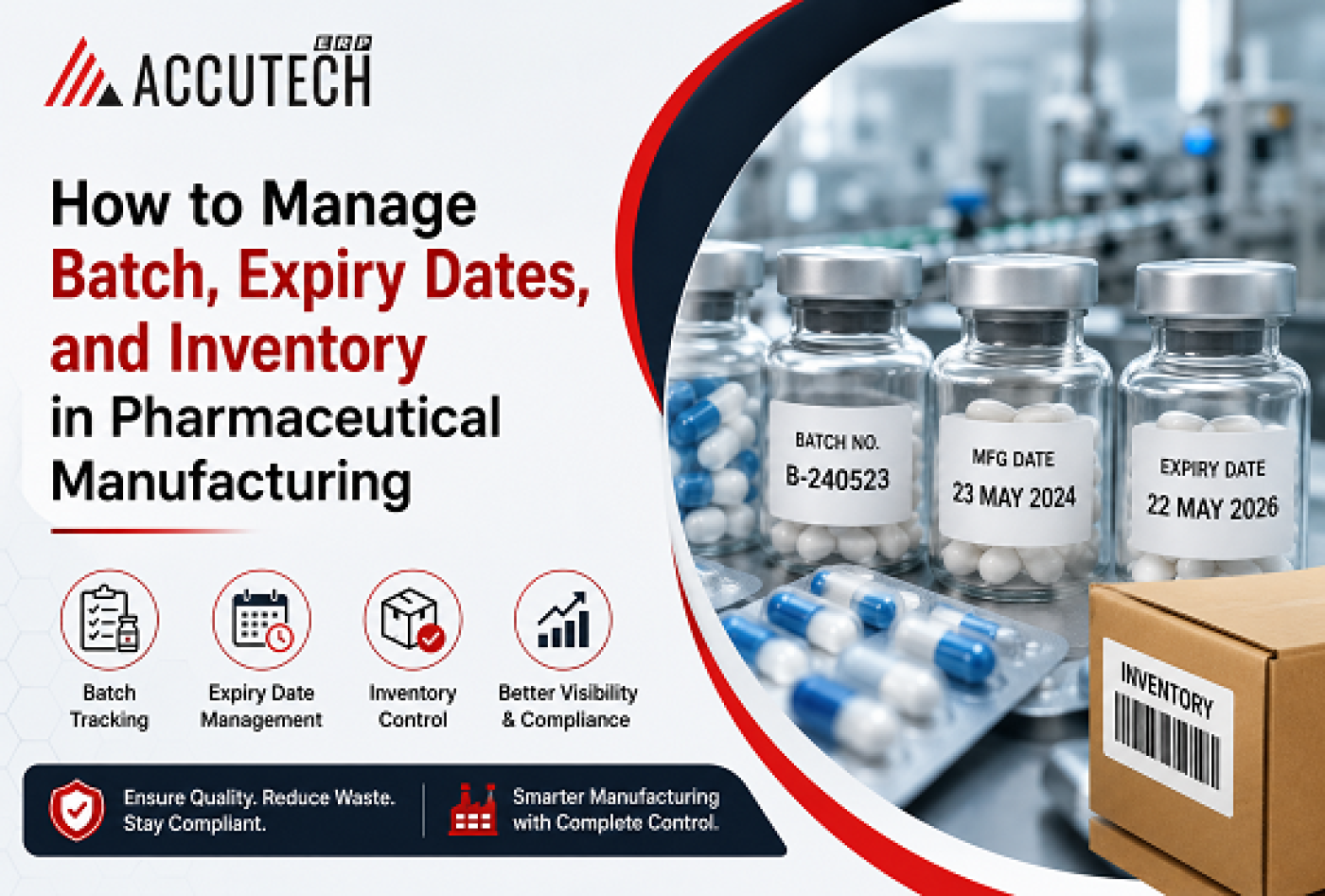
The pharmaceutical manufacturing industry operates under strict regulatory requirements and quality standards that demand exceptional precision in inventory management. Every medication, vaccine, or therapeutic agent produced must be tracked meticulously from manufacturing through distribution to ensure safety, efficacy, and compliance.
Batch management, expiry date tracking, and inventory optimization are three interconnected pillars that pharmaceutical manufacturers cannot afford to overlook. When these critical functions are managed inefficiently, the consequences include costly product losses, regulatory non-compliance, compromised patient safety, and significant financial implications.
Modern pharma software has revolutionized how pharmaceutical businesses manage their most critical assets inventory, batches, and expiry-sensitive products. Cloud-based platforms now provide real-time visibility, automated batch tracking, and intelligent inventory controls that were previously impossible to implement manually.
The complexity of managing multiple batches, each with unique expiry dates and storage requirements, demands more than spreadsheets and manual processes. Pharmaceutical manufacturing ERP integrates batch tracking, expiry management, and inventory control into a unified system
This comprehensive guide explores how pharmaceutical businesses can implement efficient batch, expiry, and inventory management practices. We'll examine proven strategies, best practices, and technological approaches that leading manufacturers are using to streamline operations while maintaining regulatory compliance.
The stakes are particularly high in pharmaceutical operations. A single batch of expired medications represents a complete loss of manufacturing investment and materials. Inefficient inventory systems result in excess stock accumulation, working capital constraints, and difficulties in meeting market demand all of which impact profitability.
Understanding Pharmaceutical Inventory Challenges
Pharmaceutical manufacturers face unique inventory management challenges that distinguish them from other industries. Unlike general retail or manufacturing, inventory in this sector involves strict regulatory compliance, temperature control requirements, batch traceability, and expiry-sensitive products that cannot be sold once expired.
These challenges require sophisticated systems to manage effectively. Without proper technological infrastructure, managing the complexity becomes nearly impossible. Manual systems fail to provide real-time visibility, cannot enforce batch-level tracking, and create endless opportunities for errors and compliance violations.
The Complexity of Pharmaceutical Inventory
Managing pharmaceutical inventory requires handling multiple layers of complexity that standard business software cannot address. This is where specialized pharma software solutions become indispensable. Enterprise-grade systems provide documentary proof of every transaction, complete batch traceability, and sophisticated inventory controls.
- Batch-Level Tracking: Each pharmaceutical product is manufactured in specific batches with unique batch numbers, manufacturing dates, and expiry timelines.
- Regulatory Compliance: Every movement of pharmaceutical products must be documented for regulatory audits and traceability requirements.
- Temperature and Storage Conditions: Different products require specific storage conditions, and deviations must be monitored and recorded.
- Multi-Location Distribution: Manufacturers often distribute products across multiple warehouses, distributors, and retail locations.
- Shelf Life Sensitivity: Pharmaceutical goods have defined shelf lives measured in months or years, after which they become non-saleable.
- Product Variants: Manufacturers typically produce multiple pack sizes, formulations, and strengths of the same medication.
- Supply Chain Complexity: Raw materials, intermediates, and finished goods must all be tracked throughout the manufacturing process.
Impact of Inefficient Inventory Management
Without proper systems and controls, inefficient inventory management creates cascading problems that affect both profitability and compliance. Many organizations still rely on disconnected systems that lack the capabilities of a comprehensive pharmaceutical manufacturing ERP , leading to significant operational challenges.
- Product Wastage: Expired products that cannot be sold represent pure loss of manufacturing investments.
- Regulatory Penalties: Inability to provide batch traceability or documentation can result in regulatory warnings and penalties.
- Cash Flow Issues: Excess inventory ties up working capital that could be used for production or business growth.
- Lost Sales: Delayed inventory information can result in missed sales opportunities due to perceived stock shortages.
- Compliance Risks: Poor batch tracking creates audit failures and potential product recall complications.
- Operational Inefficiency: Manual tracking of batch information and expiry dates requires significant labor and is prone to error.
Key Components of Effective Batch Management
Batch management is the foundation of effective pharmaceutical inventory control. A batch represents a specific production run with unique characteristics, manufacturing date, testing results, and expiry date. Effective batch management requires systematic tracking from production through distribution, a process that modern systems automate seamlessly.
Core Elements of Batch Tracking Systems
Successful batch tracking incorporates several key components that work together to create a comprehensive management ecosystem.
Batch Management Component | Purpose and Function |
Unique Batch Identification | Each batch receives a unique batch number for complete traceability throughout its lifecycle. |
Manufacturing Date Recording | Precise documentation of when each batch was manufactured enables accurate shelf life calculation. |
Quality Assurance Documentation | Storage of QA test results, stability data, and quality parameters associated with each batch. |
Expiry Calculation System | Automatic calculation of expiry dates based on manufacturing dates and product shelf life specifications. |
Location Tracking | Real-time tracking of batch location (manufacturing facility, warehouse, distributor, retail outlet). |
Movement History | Complete audit trail of all batch movements, sales, and adjustments throughout the product lifecycle. |
Benefits of Centralized Batch Management
When manufacturers implement comprehensive systems with centralized batch management capabilities, they unlock significant operational and compliance advantages. The right pharma software solution enables manufacturers to maintain complete control over pharmaceutical operations while meeting regulatory requirements and customer demands.
- Complete Traceability: In case of product recalls or quality issues, manufacturers can immediately identify affected batches and track their location.
- Regulatory Compliance: Comprehensive batch documentation meets regulatory requirements for audits and inspections.
- Reduced Product Loss: Better batch tracking helps ensure older stock is distributed first (FIFO principle), reducing expiry losses.
- Quality Control: Batch-level quality documentation ensures only compliant products are distributed.
- Simplified Recalls: If issues are identified, batches can be precisely recalled without affecting unrelated products.
- Customer Confidence: Customers and distributors can easily verify batch information and quality credentials.
Expiry Date Tracking and Management Systems
Expiry date management is perhaps the most time-sensitive aspect of pharmaceutical inventory management. Expired medications represent a complete loss to the manufacturer and pose potential risks to patients if accidentally dispensed. Effective expiry management requires automation, real-time alerts, and systematic inventory rotation capabilities that modern systems provide with precision.
Advanced Expiry Management Features
Modern systems include sophisticated expiry management features that go beyond simple date recording. Enterprise-grade pharmaceutical manufacturing ERPsolutions provide automated alerts, intelligent batch prioritization, and comprehensive compliance reporting that keeps manufacturers in full control of their expiry-sensitive inventory.
- Automatic Expiry Calculation: Systems automatically calculate expiry dates when batches are received or manufactured, eliminating manual calculations.
- Color-Coded Expiry Alerts: Inventory reports use visual indicators to highlight approaching expiry dates (e.g., 6 months, 3 months, 1 month before expiry).
- Batch Segregation: Systems prevent mixing of batches with different expiry dates, maintaining clear batch identity throughout inventory.
- FIFO Enforcement: Automated systems ensure First-In-First-Out inventory rotation, prioritizing sale of older batches before newer stock.
- Expiry-Based Filtering: During sales order processing, systems automatically propose batches approaching expiry first to prevent waste.
- Compliance Reporting: Generate detailed reports of batch movements, expiry status, and disposed products for regulatory compliance.
Implementing Expiry Management Best Practices
- Implement Automatic Alerts: Set up system notifications when batches approach expiry (at 6 months, 3 months, and 1 month thresholds).
- Conduct Regular Expiry Audits: Perform physical inventory counts against system records to verify no expired products remain in circulation.
- Document Disposal: Maintain detailed records of all expired or disposed products with reasons for disposal.
- Analyze Expiry Trends: Review patterns of expiry losses to identify if production forecasting or inventory levels need adjustment.
- Coordinate with Distribution Partners: Ensure distributor and retail partners are aware of expiry dates and follow FIFO principles.
- Use Multi-Warehouse Visibility: Track expiry status across all warehouses and locations to manage stock strategically.
Leveraging Software Solutions for Inventory Optimization
Technology solutions represent a significant advancement in how pharmaceutical businesses manage inventory. Unlike manual systems or basic accounting software, comprehensive platforms integrate batch tracking, expiry management, inventory control, sales, purchasing, and accounting into a unified system. Modern pharma software has transformed pharmaceutical inventory management from a manual, error-prone process into an automated, intelligent system that provides real-time visibility and control.
How Modern Systems Work
Enterprise systems operate as integrated business platforms where inventory transactions automatically flow through multiple modules. Pharmaceutical manufacturing software eliminates manual data entry, reduces errors, and ensures that batch-level information is consistently maintained across all business processes.
1. Production/Receiving: When new batches are received or manufactured, product information and batch details are entered into the system.
2. Automatic Batch Assignment: Systems automatically generate unique batch numbers and calculate expiry dates based on manufacturing date and shelf life.
3. Inventory Tracking: Real-time inventory levels are updated, showing available stock by batch, location, and expiry status.
4. Sales Processing: When customers place orders, systems propose batches approaching expiry first to ensure FIFO rotation.
5. Accounting Integration: Sales transactions automatically update accounting records, inventory accounts, and financial reports.
6. Reporting and Alerts: Real-time dashboards show inventory status, approaching expiries, slow-moving products, and stock-out risks.
7. Multi-Location Visibility: All locations (manufacturing, warehouses, distributors) have visibility into central inventory data.
8. Regulatory Compliance: Complete audit trails, batch traceability, and documentation support regulatory compliance and recalls if needed.
Key Features of Enterprise-Grade Solutions
When selecting software, look for these critical features that distinguish robust platforms from basic inventory systems:
- Batch-Level Tracking: Every transaction is tracked at the batch level, not just product level, providing complete traceability.
- Inventory by Batch: Inventory reports show stock quantities broken down by batch, location, and expiry date.
- Expiry Management: Automatic expiry calculation, alerts, and filtering to prevent expired products from being sold.
- Multi-Location Management: Centralized control of inventory across multiple warehouses, branches, and distribution points.
- Real-Time Dashboards: Management dashboards showing current inventory status, approaching expiries, and stock movements.
- Integration with Accounting: Inventory transactions automatically flow to accounting, eliminating manual reconciliation.
- GST Compliance: For Indian businesses, automated GST billing and reporting integrated with inventory and sales.
- Mobile Access: Field teams and warehouse staff can access inventory information and update records using mobile apps.
- Advanced Reporting: Custom reports for sales, purchases, inventory, batch movements, and financial performance.
- Scalability: System can handle growing product portfolios, locations, and transaction volumes without performance degradation.
ROI of Implementing Modern Solutions
Investing in integrated platforms typically delivers measurable returns within 12-18 months through multiple channels. Organizations that implement modern pharma software experience significant improvements across operational efficiency, compliance, and financial performance.
Reduced Expiry Losses: Better inventory visibility and FIFO management can reduce expired product losses by 30-50%, saving thousands monthly.
Improved Working Capital: Faster inventory turnover and reduced slow-moving stock frees up cash for productive investments.
Labor Efficiency: Automating manual batch tracking, expiry monitoring, and reporting reduces staff time requirements.
Faster Order Processing: Automated systems process orders and generate documents faster, improving customer satisfaction and revenue recognition.
Compliance Cost Reduction: Automated audit trails and documentation reduce compliance-related costs and audit findings.
Operational Visibility: Better information enables faster decision-making, reducing operational response time.
Scalability Without Additional Overhead: As business grows, systems scale without proportional increases in administrative staff.
Best Practices for Efficient Inventory Control
Successful inventory management requires adherence to industry best practices and continuous process improvement. Technology provides the foundation, but operational excellence comes from combining systems with disciplined processes and trained personnel.
Establishing Inventory Management Standards
- Define Standard Operating Procedures: Document detailed procedures for receiving, storage, movement, and disposal of pharmaceutical products.
- Implement Cycle Counting: Conduct regular cycle counts of high-value or fast-moving items rather than waiting for annual physical counts.
- Storage Organization: Arrange inventory by batch, expiry date, and location using standardized labeling systems.
- Temperature Monitoring: For temperature-sensitive products, implement monitoring systems that alert staff to deviations.
- Security and Access Control: Restrict access to inventory areas and implement controls to prevent unauthorized product movement.
- Training Programs: Ensure all staff handling inventory understand batch tracking requirements and proper procedures.
- Vendor Coordination: Work with suppliers on delivery schedules, quality standards, and batch information requirements.
- Demand Forecasting: Use historical sales data to forecast demand and optimize production and purchasing plans.
Inventory Analysis and Optimization Techniques
Regular analysis of inventory data helps identify optimization opportunities. Modern platforms provide analytics capabilities that enable sophisticated analysis of inventory patterns.
ABC Analysis: Classify products as A (high-value, high-volume), B (medium), or C (low) items. Allocate management resources proportionally to item criticality.
Slow-Moving Product Analysis: Identify products with low turnover and excess inventory. Adjust production or implement promotional strategies.
Expiry Loss Analysis: Track which products experience high expiry losses and adjust inventory levels or production forecasts accordingly.
Stock Turnover Metrics: Calculate inventory turnover rates by product to identify opportunities for improvement.
Lead Time Analysis: Review procurement lead times and adjust reorder points to maintain optimal service levels.
Cost of Holding Inventory: Calculate the total cost of holding inventory (storage, handling, financing) to make informed batch size decisions.
Seasonal Pattern Analysis: Identify seasonal demand patterns and adjust inventory levels accordingly to minimize both stockouts and excess stock.
Implementing Modern Software: A Step-by-Step Approach
Implementing solutions requires careful planning to ensure smooth transition and maximum adoption. Organizations choosing to modernize their operations should follow a structured, phased approach that manages risk while ensuring business continuity. When a pharmaceutical manufacturing ERP is properly implemented, organizations experience faster return on investment and more efficient operations.
Phase 1: Assessment and Planning
- Current State Analysis: Document existing inventory processes, systems, and pain points.
- Requirements Definition: Identify specific needs for batch tracking, expiry management, and inventory visibility.
- Software Evaluation: Compare available solutions based on your specific requirements.
- Vendor Selection: Choose a vendor with proven expertise in pharmaceutical industry requirements.
- Implementation Timeline: Develop realistic project timeline with milestones and resource allocation.
Phase 2: Data Preparation and System Setup
- Historical Data Consolidation: Consolidate batch and inventory data from all existing systems into a unified format.
- Product Master Setup: Create comprehensive product master with all variants, batches, and specifications.
- User Access Configuration: Set up user accounts and access permissions based on roles and responsibilities.
- Batch Number Format: Define batch numbering conventions and configure system to follow your standards.
- Locations and Warehouses: Map all inventory locations and configure multi-location tracking.
- System Customization: Customize reports, alerts, and processes to match your business requirements.
Phase 3: Testing and Validation
- User Acceptance Testing: Conduct thorough testing with actual users from accounts, warehouse, and sales teams.
- Batch Tracking Validation: Verify batch tracking accuracy with sample transactions and reports.
- Expiry Management Testing: Test expiry calculation, alert thresholds, and FIFO functionality.
- Regulatory Compliance Verification: Ensure audit trails, traceability, and reporting meet regulatory requirements.
- Integration Testing: Test integration with existing accounting or systems.
- Performance Testing: Validate system performance with expected transaction volumes.
Phase 4: Implementation and Go-Live
- Parallel Running: Run new system alongside existing system for 1-2 weeks to verify accuracy.
- Staff Training: Conduct comprehensive training for all users on new processes and system features.
- Data Migration: Migrate historical data from existing systems to new platform.
- Go-Live: Switch to new system and monitor closely for issues during initial period.
- Support and Optimization: Provide immediate support and address any issues or process improvements.
Phase 5: Optimization and Continuous Improvement
- User Feedback Collection: Gather feedback from users about system functionality and usability.
- Process Refinement: Optimize processes based on actual usage patterns and business needs.
- Report Development: Create custom reports for specific business analysis and decision-making.
- Advanced Feature Utilization: Implement advanced features like predictive analysis or automated alerts.
- Ongoing Training: Provide refresher training and introduce new features as software is updated.
Overcoming Common Inventory Management Challenges
Even with modern systems implemented, organizations face common implementation and operational challenges. Understanding these challenges and having mitigation strategies is crucial for success.
Challenge 1: Batch Data Accuracy and Completeness
Challenge: Historical batch data may be incomplete or inaccurate, making it difficult to establish accurate starting inventory.
Solution:
- Implement data cleansing procedures to identify and correct inconsistencies before migration.
- Conduct physical inventory count and reconcile against system records.
- For historical batches with missing data, use reasonable assumptions (average shelf life) to establish starting position.
- Focus implementation on accurate tracking going forward rather than perfect historical data.
Challenge 2: Resistance to Change from Staff
Challenge: Employees accustomed to manual processes may resist adopting new systems.
Solution:
- Involve staff in the system selection and implementation process to increase buy-in.
- Provide comprehensive training with hands-on practice before go-live.
- Highlight benefits like reduced manual work and improved accuracy in batch tracking.
- Designate power users in each department to champion the new system and support peers.
Challenge 3: Integration with Existing Systems
Challenge: New platforms must integrate with accounting, sales, and other systems without data conflicts.
Solution:
- Select solutions with proven integration capabilities or APIs that connect with your existing systems.
- Map all data flows between systems and establish clear ownership for each data element.
- Consider cloud-based solutions designed to integrate seamlessly with other cloud applications.
- Plan for ongoing system maintenance and updates to maintain integration integrity.
Challenge 4: Multi-Location Inventory Synchronization
Challenge: Keeping inventory accurate across multiple warehouses, distributors, and retail outlets is complex.
Solution:
- Use cloud-based solutions with real-time synchronization capabilities.
- Establish clear procedures for inter-location transfers and ensure the system reflects movements immediately.
- Implement regular reconciliation checks between actual and system inventory at each location.
- Provide batch-level visibility to all locations so inventory movements maintain batch integrity.
Future Trends in Pharmaceutical Inventory Management
The pharmaceutical industry is evolving rapidly, and inventory management is benefiting from emerging technologies and approaches. Forward-thinking manufacturers are adopting next-generation solutions that incorporate AI, IoT, and blockchain technologies to achieve unprecedented levels of visibility and control.
Artificial Intelligence and Predictive Analytics: AI algorithms analyze historical demand patterns to predict future requirements more accurately, reducing both stockouts and excess inventory.
Internet of Things (IoT) Sensors: Temperature and humidity sensors on products and in warehouses provide real-time environmental monitoring and automatic alerts.
Blockchain for Traceability: Blockchain technology creates immutable records of batch movements, improving traceability and regulatory compliance transparency.
Automated Warehouse Systems: Robotic systems and automated guided vehicles (AGVs) handle inventory movement, reducing manual handling and improving accuracy.
Real-Time Supply Chain Visibility: Advanced platforms provide end-to-end visibility from manufacturing through distribution to final patient delivery.
Sustainability Initiatives: Modern solutions increasingly track and optimize for sustainability, reducing waste and environmental impact of expired products.
Cloud and Edge Computing: Distributed cloud architecture ensures resilience, scalability, and rapid data access for inventory decisions.
Mobile-First Applications: Field teams use mobile applications for real-time inventory updates, batch scanning, and order fulfillment.
Frequently Asked Questions About Pharmaceutical Inventory Management
Q1: What is the difference between batch tracking and inventory management?
Batch tracking focuses on monitoring specific batches of products with unique characteristics and expiry dates, while inventory management is the broader process of tracking all product quantities, locations, and movements. Pharmaceutical inventory management must incorporate batch-level tracking as a core component.
Q2: How does modern software help reduce expired product losses?
Advanced systems provide real-time visibility into approaching expiry dates, automatically prioritize older batches for sale (FIFO), generate alerts before expiry, and track disposal. These features collectively reduce expired products that must be discarded.
Q3: Can modern solutions integrate with existing accounting systems?
Yes, well-designed platforms can integrate with accounting systems through APIs or direct data connections. Inventory transactions flow automatically to accounting, eliminating manual data entry and reconciliation errors.
Q4: What are the key regulatory compliance requirements for batch tracking?
Key requirements include maintaining unique batch identification, documenting batch movements and locations, recording quality assurance data, maintaining audit trails, and enabling rapid traceability for recalls. Modern systems automate compliance documentation.
Q5: How can small pharmaceutical manufacturers benefit from modern systems?
Small manufacturers benefit from improved batch tracking, reduced expiry losses, better cash flow management, and ability to serve customers with proven traceability. Cloud-based solutions make sophisticated platforms accessible without large capital investments.
Q6: What is FIFO and why is it important in pharmaceutical inventory?
FIFO (First-In-First-Out) ensures older batches are sold or distributed before newer ones. This is critical in pharmaceuticals because it prevents older products from expiring while newer stock sits unused. Modern systems automate FIFO enforcement.
Q7: How should pharmaceutical businesses handle batches approaching expiry?
Businesses should monitor batches reaching 6-month and 3-month expiry thresholds, prioritize them for sales/distribution, offer them to price-sensitive markets if applicable, and document any that must be disposed of. Automated systems handle this process efficiently.
Q8: What metrics should be tracked to evaluate inventory management performance?
Key metrics include inventory turnover rate, days inventory outstanding (DIO), expiry loss percentage, stock-out frequency, order fulfillment time, and working capital tied up in inventory. These metrics reveal efficiency and identify improvement opportunities.
Q9: How can multi-location pharmaceutical businesses ensure inventory accuracy?
Use cloud-based solutions with real-time synchronization, establish clear procedures for inter-location transfers, implement regular reconciliation checks, and ensure all locations maintain batch-level integrity in their records.
Q10: What should pharmaceutical businesses look for when selecting inventory solutions?
Look for batch-level tracking, expiry management features, multi-location support, real-time dashboards, GST compliance (for Indian businesses), integration capabilities, mobile access, regulatory compliance features, and responsive vendor support.
Conclusion:
Efficient batch, expiry, and inventory management is not optional for pharmaceutical manufacturers; it's fundamental to business success, regulatory compliance, and patient safety. In an industry where expired products represent complete loss and traceability can be critical to recalls, having robust systems and processes is essential.
By automating batch tracking, expiry monitoring, and inventory optimization, modern pharma software such as Accutech ERP transforms what was once a labor-intensive manual process into an efficient, accurate, and compliant operation. The journey from manual inventory management to a modern solution requires careful planning, staff engagement, and a commitment to process improvement. However, the benefits reduced expiry losses, improved working capital, better regulatory compliance, and enhanced operational visibility make the investment highly worthwhile.
Leading pharmaceutical manufacturers are already leveraging modern ERP systems to optimize their inventory operations. With Accutech ERP, pharmaceutical businesses can gain better control over batch-wise inventory, expiry dates, stock movement, purchasing, sales, and reporting through a centralized system. Companies that implement such solutions can gain competitive advantages through faster order fulfillment, better customer service, improved inventory accuracy, and stronger profitability.
If your pharmaceutical business is still relying on manual batch tracking, spreadsheet-based inventory management, or basic accounting software without specialized pharmaceutical features, now is the time to evaluate a modern solution like Accutech ERP. Implementation requires commitment and resources, but it can position your organization for sustainable growth, better compliance, and long-term operational excellence.
The question is no longer whether pharmaceutical businesses should modernize, but how soon they can begin and Accutech ERP can help make that transition more efficient and manageable.