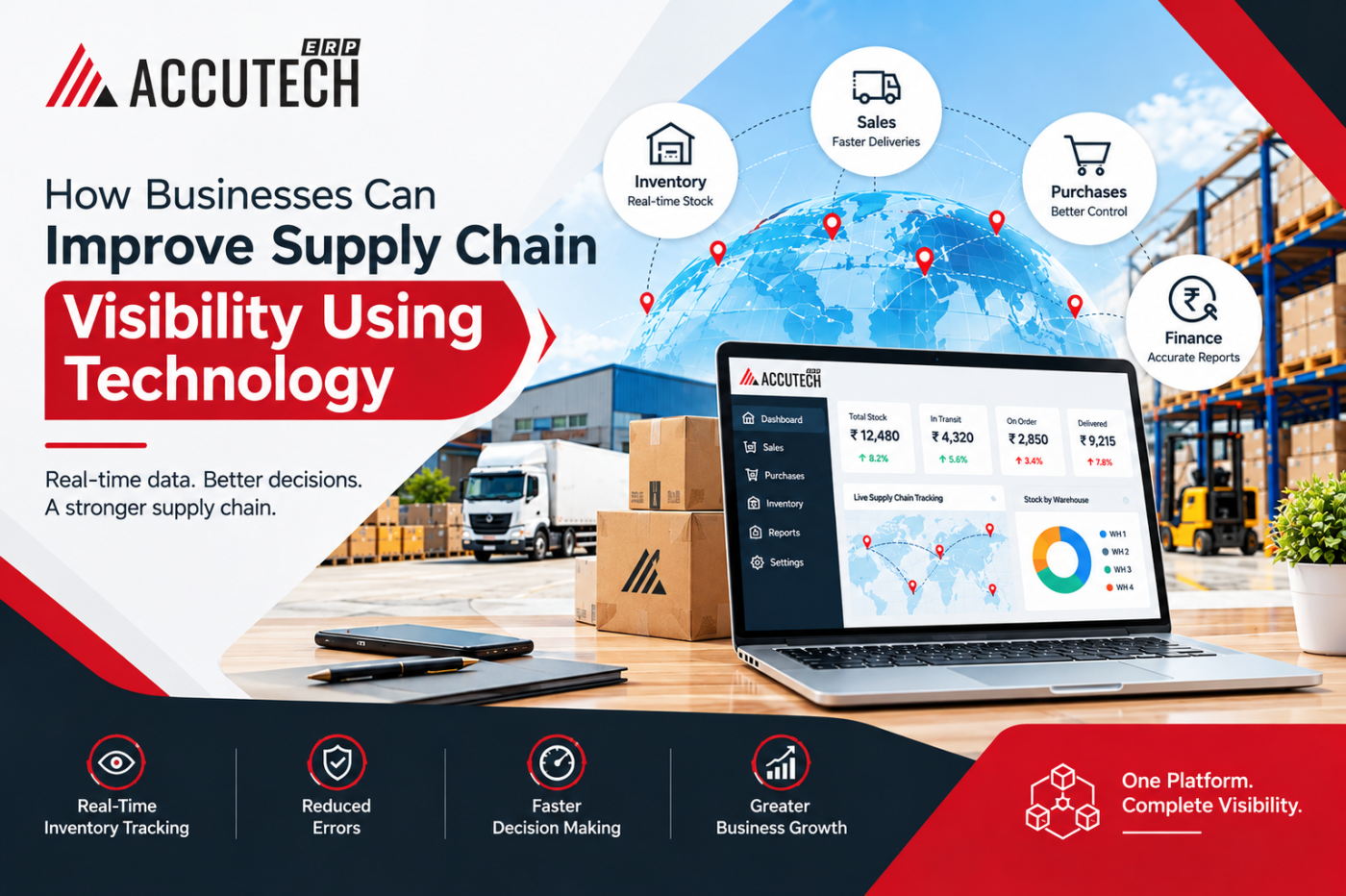
How Businesses Can Improve Supply Chain Visibility Using Technology
In today's fast-paced FMCG industry, supply chain visibility has become more critical than ever. Companies managing complex distribution networks face increasing pressure to maintain accurate inventory levels, monitor shipments in real-time, and respond quickly to changing market demands. However, many businesses still depend on outdated systems, manual data entry, and disconnected processes that create gaps across their operations.
The challenge is significant. When distributors lack complete visibility into their supply chain such as product locations, inventory movement, and shipment timelines they often make decisions based on incomplete information. This results in excess inventory, stock shortages, delayed deliveries, and potential revenue losses.
This is where FMCG Distribution ERP Software becomes valuable. A specialized enterprise resource planning system designed for fast-moving consumer goods helps businesses connect inventory, sales, purchasing, finance, and distribution activities through one centralized platform.
With the right fmcg management software, companies can improve operational control, reduce manual efforts, and gain better insights into their entire supply chain. This guide explains how advanced ERP solutions help FMCG businesses achieve better visibility, efficiency, and growth.
What is Supply Chain Visibility?
Before understanding the solution, it is important to identify the common challenges that FMCG companies face while managing their supply chain operations.
The Bullwhip Effect
Small changes in customer demand can create major fluctuations throughout the supply chain. For example, when retailers reduce their orders slightly, manufacturers may overestimate the impact and reduce production significantly. Without accurate data visibility, these changes continue to increase across different supply chain levels.
A connected ERP system helps businesses analyze demand patterns and make better decisions instead of reacting to sudden market changes.
Inventory Imbalances
Maintaining the right inventory level is one of the biggest challenges for FMCG businesses. Excess stock blocks working capital and increases the risk of product expiry, while insufficient inventory results in missed sales opportunities.
A modern fmcg management software solution helps companies monitor stock movement, analyze demand trends, and maintain balanced inventory levels across locations.
Multi-Location Coordination
Managing multiple warehouses, branches, and distribution points creates complexity in daily operations. Without a centralized system, teams may work with different inventory information, resulting in delays and inaccurate decisions.
A centralized ERP platform provides a unified view of inventory, sales, purchases, and distribution activities, helping businesses coordinate operations more effectively.
Expiration and Perishability
Many FMCG products have limited shelf life and require proper batch and expiry management. Businesses need accurate tracking methods to follow FIFO practices, reduce wastage, and prevent expired stock issues.
Advanced inventory systems help automate expiry monitoring, batch tracking, and stock rotation processes to improve product control.
Compliance and Traceability
FMCG companies must maintain proper documentation, transaction records, and regulatory compliance. Tracking products from purchase to final distribution requires accurate records and transparent processes.
A dedicated FMCG Distribution ERP Software helps maintain complete transaction history, improve traceability, and simplify compliance reporting.
Real-time Inventory Tracking and Fmcg Management Software
Effective supply chain visibility starts with accurate inventory tracking. Traditional inventory methods depend heavily on manual counting, delayed updates, and spreadsheet-based records, which often create errors and information gaps.
Modern ERP solutions provide real-time inventory control by automatically recording stock movement and updating information across the entire business network.
Automated Data Capture
Whenever products are received, transferred, or dispatched, the system captures transaction details automatically through digital processes such as barcode scanning.
This reduces manual entry errors, improves speed, and ensures inventory records remain accurate across warehouses and locations.
Synchronized Database
All branches, warehouses, and distribution centers operate through a connected database. When stock changes at one location, updated information becomes available across the system.
This centralized approach allows managers and teams to access reliable information without waiting for manual reports.
Predictive Alerts and Analytics
Modern ERP platforms do more than display current stock levels. They analyze sales patterns, inventory trends, and customer demand to provide useful insights.
Businesses can receive alerts about low inventory, slow-moving products, and upcoming stock requirements, helping them take preventive action.
Location-Specific Insights
Different markets may have different purchasing patterns. A product that sells quickly in one region may move slower in another location.
A smart distribution system analyzes regional demand and helps businesses plan inventory allocation according to actual requirements.
The result is improved stock accuracy, faster order fulfillment, reduced inventory costs, and better customer experience. Companies using advanced digital inventory solutions can achieve stronger control over their supply chain operations.
Benefits of Implementing Fmcg Distribution Business Software
Organizations adopting a dedicated distribution management platform experience several measurable improvements across their operations.
Improved Inventory Accuracy
Manual inventory management often creates differences between actual stock and recorded stock. Automated systems reduce human errors and provide more reliable inventory information.
Businesses can quickly identify discrepancies, improve stock planning, and maintain better control over products.
Reduced Operational Costs
Better inventory planning helps reduce unnecessary stock holding, product wastage, and emergency purchases. Businesses can optimize resources and improve overall operational efficiency.
A well-implemented fmcg distribution business softwaresolution supports cost reduction by automating repetitive tasks and improving decision-making.
Faster Order Processing
Digital order management improves the complete order-to-delivery cycle. Sales teams can process orders faster, warehouse teams can prepare shipments efficiently, and customers receive products within shorter timelines.
Better Decision Making
Real-time reports and dashboards provide valuable insights into sales performance, inventory movement, customer trends, and financial activities.
Managers can make decisions based on accurate business information instead of assumptions.
Enhanced Compliance
ERP systems simplify taxation, reporting, and documentation requirements by maintaining organized records of all transactions.
Automated reports and audit trails help businesses stay prepared for compliance requirements.
Improved Customer Service
When businesses have accurate stock information and order tracking capabilities, they can provide better communication to customers.
Customers receive accurate delivery updates, faster responses, and improved service experiences.
Scalability for Growth
As businesses expand into new locations, add products, or increase transaction volumes, a scalable ERP solution can support future growth without replacing the complete system.
A flexible fmcg erp software platform allows businesses to manage increasing operational requirements efficiently.
Best Practices for Optimizing Supply Chain Visibility
Implementing an ERP system is only the beginning. To achieve maximum benefits from your supply chain technology, businesses should follow structured practices that improve efficiency and data accuracy.
Define Clear Visibility Objectives
Before selecting a solution, businesses should clearly identify what type of visibility they require. This may include inventory tracking, expiry monitoring, delivery updates, customer reporting, or warehouse management.
Understanding these requirements helps organizations select the right system according to their operational needs.
Establish Data Quality Standards
Accurate data is the foundation of any successful ERP implementation. Businesses should maintain consistent product codes, correct inventory details, accurate customer records, and standardized location information.
Regular data verification ensures that reports and analytics provide meaningful insights.
Implement Barcode or RFID Systems
Digital identification systems improve inventory accuracy by reducing manual entry and speeding up warehouse operations.
When combined with ERP platforms, barcode technology enables faster receiving, movement, and dispatch processes.
Create Standardized Processes
Different departments and locations often follow different working methods. Standardizing processes ensures that every branch follows the same workflow.
A connected fmcg management software platform works more effectively when all teams follow consistent operational practices.
Train Your Team Thoroughly
Technology adoption depends on proper user training. Employees should understand how the system works and how it improves their daily tasks.
Training helps teams use the platform effectively and reduces dependency on manual methods.
Monitor Key Performance Indicators (KPIs)
Businesses should regularly analyze important performance indicators such as:
- Inventory accuracy
• Order processing time
• Stock availability
• Delivery performance
• Customer satisfaction
• Product movement trends
Tracking these metrics helps companies continuously improve their supply chain performance.
Optimize Integration Points
Modern businesses use multiple systems for accounting, CRM, e-commerce, and reporting. A flexible ERP platform should connect smoothly with these applications to maintain consistent data flow.
Technology Integration and Automation
Modern supply chains require more than basic inventory control. Advanced technologies are helping FMCG companies improve speed, accuracy, and decision-making.
Mobile Applications
Sales teams and distributors need access to business information while working in the field. Mobile-enabled solutions allow users to check stock availability, manage orders, and update information from anywhere.
This improves communication between field teams, warehouses, and management.
Artificial Intelligence and Machine Learning
AI-based systems are improving demand forecasting, identifying unusual patterns, and helping businesses optimize inventory planning.
Future ERP solutions will increasingly use intelligent automation to support faster and more accurate decisions.
Internet of Things (IoT)
IoT devices provide real-time information about products, transportation conditions, and storage environments.
For products requiring special handling, sensors can monitor conditions and send alerts when problems occur.
Cloud-Based Architecture
Cloud technology allows businesses to access their ERP systems securely from different locations without maintaining expensive infrastructure.
Cloud-based solutions provide scalability, automatic updates, and easier collaboration between teams.
API Ecosystem
Modern ERP platforms support integration with third-party applications through APIs. This allows businesses to build connected technology environments according to their specific requirements.
A scalable FMCG Distribution ERP Software solution enables organizations to connect multiple business processes into one efficient ecosystem.
Measuring Success and ROI
Implementing technology requires investment, and businesses need to measure the impact of their ERP adoption.
Important performance indicators include:
- Reduction in inventory holding costs
• Improvement in inventory accuracy
• Faster order fulfillment
• Reduction in stock shortages
• Lower product wastage
• Reduced manual workload
• Improved customer satisfaction
• Better demand forecasting accuracy
Companies using effective ERP solutions generally experience improved operational efficiency through better planning, automation, and visibility.
The actual return depends on business size, implementation quality, employee adoption, and how effectively the system is used.
Common Mistakes to Avoid
While implementing an ERP solution, businesses should avoid common mistakes that can reduce the effectiveness of the system.
Choosing Based on Price Alone
Selecting software only because of low cost can create problems later. Businesses should evaluate features, support quality, scalability, and long-term value before making a decision.
Insufficient Planning
Successful implementation requires proper planning, requirement analysis, and process understanding.
A rushed implementation can create unnecessary delays and operational challenges.
Inadequate Training
Employees need proper guidance to use new technology effectively. Without training, teams may continue depending on old manual methods.
Ignoring Change Management
ERP implementation changes the way employees work. Proper communication and support help teams adapt to new processes.
Poor Data Migration
Moving old business data into a new system requires careful checking and cleaning. Incorrect data can affect reports and decision-making.
Lack of Executive Support
Leadership involvement plays an important role in successful implementation. Management support ensures proper resources, adoption, and continuous improvement.
Future Trends in FMCG ERP Software
The FMCG industry is continuously changing, and technology will play a major role in future supply chain management.
Predictive Analytics at Scale
Future ERP systems will use advanced analytics to predict demand changes, identify supply risks, and recommend better business actions.
Sustainability Tracking
Businesses will increasingly focus on sustainable operations. Future systems will help track waste reduction, environmental impact, and responsible sourcing.
Real-Time Visibility Beyond Enterprises
Supply chains will become more connected, allowing suppliers, distributors, retailers, and customers to access relevant information through integrated platforms.
Autonomous Systems
Automation will expand through robotics, smart warehouses, and intelligent logistics systems.
ERP platforms will help coordinate these automated processes.
Hyperlocal Fulfillment
Growing online demand will increase the need for faster delivery networks. Technology will help businesses manage localized inventory and faster fulfillment.
Blockchain for Traceability
Blockchain technology may improve product tracking by creating transparent and secure records throughout the supply chain.
Frequently Asked Questions
Q1: What is the difference between FMCG ERP software and general ERP?
FMCG-focused ERP solutions are designed specifically for fast-moving consumer goods businesses. They include features such as batch tracking, expiry management, inventory control, distribution workflows, and industry-specific reporting.
General ERP systems may require additional customization to support these requirements.
Q2: How long does implementation usually take?
Implementation time depends on business size, customization requirements, number of locations, and data migration needs.
Small businesses may complete implementation faster, while large multi-location organizations may require more planning and testing.
Q3: What benefits can businesses expect?
Businesses can improve inventory control, reduce manual work, increase reporting accuracy, optimize distribution processes, and make faster decisions using real-time information.
Q4: Can ERP integrate with existing systems?
Yes. Modern ERP solutions support integration with accounting systems, CRM platforms, e-commerce applications, and other business tools.
Q5: What training is required?
Different users require different training based on their roles. Administrators, sales teams, warehouse staff, and management teams need training according to their daily activities.
Q6: How does ERP help with GST compliance?
ERP systems automate tax calculations, maintain transaction records, and generate reports required for compliance processes.
Q7: Can ERP manage multiple locations?
Yes. Advanced systems support multiple branches, warehouses, and business units while maintaining centralized control.
Q8: What security features are included?
Modern ERP platforms provide user permissions, access controls, data protection, audit tracking, and secure database management.
Q9: How does ERP improve customer service?
Better inventory visibility, faster order processing, and accurate delivery information help businesses provide improved customer experiences.
Q10: What happens if the system stops working?
Reliable ERP platforms provide backup systems, recovery processes, and support mechanisms to minimize operational disruption.
Conclusion
Supply chain visibility has become essential for FMCG businesses operating in a competitive market. Companies that depend on manual processes and disconnected systems often face inventory challenges, operational delays, and customer service issues.
A modern fmcg distribution business software solution helps businesses connect their operations, improve visibility, automate workflows, and make better decisions using accurate information.
The future of FMCG operations will depend on businesses that can respond quickly, manage resources efficiently, and build smarter supply chains. Having the right technology partner can help organizations achieve better control, accuracy, and long-term growth.
Accutech ERP provides a complete solution for FMCG businesses by connecting inventory management, sales, purchases, accounting, reporting, and distribution operations through one integrated platform. With the right ERP system, businesses can reduce manual efforts, improve efficiency, and gain better visibility across their supply chain.
Choosing the right fmcg erp software is not only about managing inventory or transactions. It is about creating a connected business environment that supports growth, improves productivity, and delivers better customer value.
Businesses that invest in digital transformation today will be better prepared for future market demands and changing customer expectations with solutions like Accutech ERP.