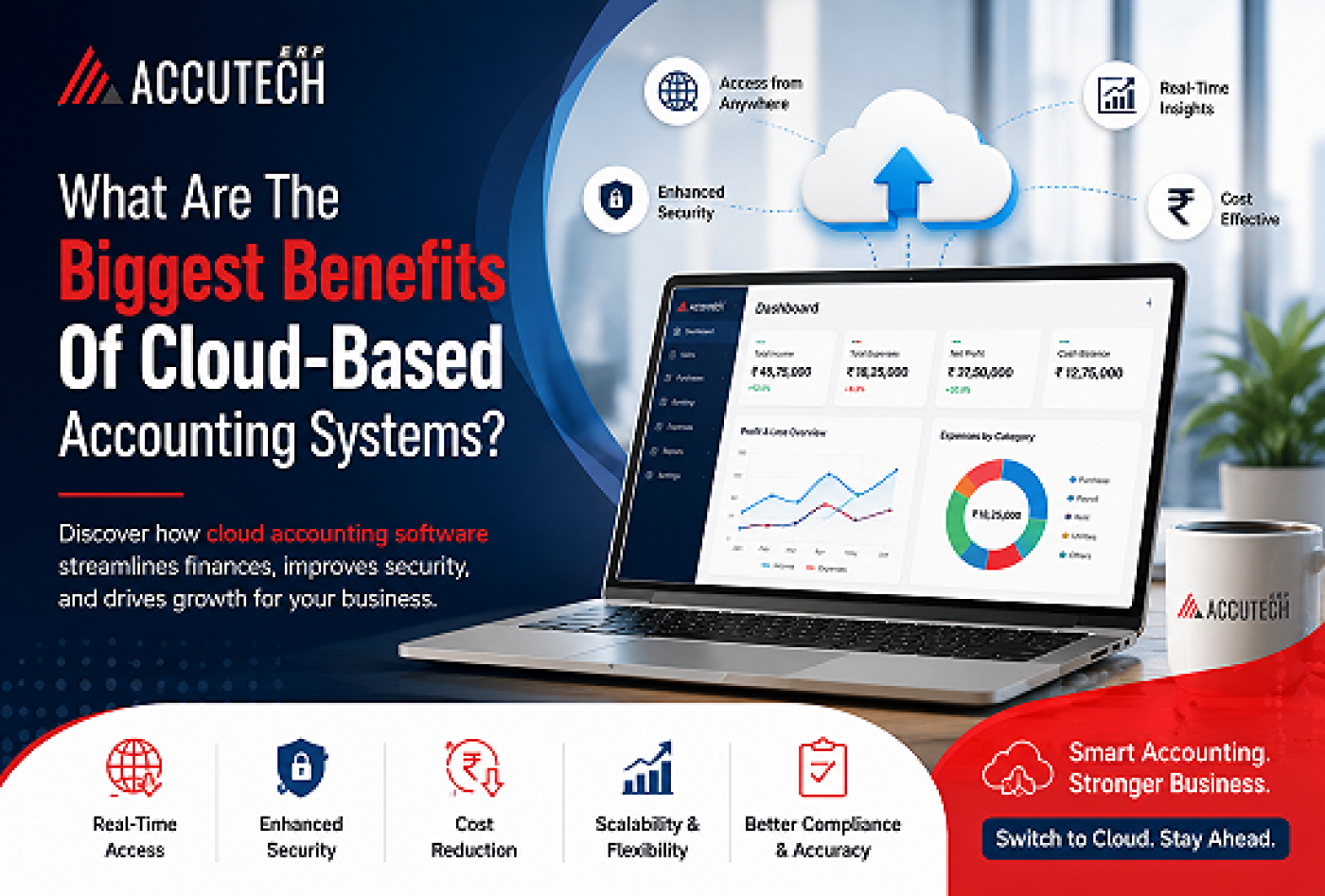
The world of accounting has transformed dramatically. Remember when accounting meant dusty ledgers, filing cabinets overflowing with receipts, and accountants hunched over calculators late into the evening? Those days are fading fast.
Today, businesses of all sizes are discovering a game-changing solution: Cloud-Based Accounting Software. If you're still managing finances with outdated systems or spreadsheets, you're missing massive advantages that could transform how you run your business.
In this comprehensive guide, I'll walk you through the most significant benefits of cloud accounting software, share real-life success stories, and help you understand why thousands of businesses are making the switch. Whether you're a small startup, a growing company, or managing multiple branches, this article will show you exactly how cloud-based accounting can revolutionize your financial management.
The Evolution of Accounting: Why Cloud-Based Systems Matter
Let me share a story that illustrates why accounting has changed so fundamentally.
Three years ago, Rajesh Kumar owned a successful textile trading business in Delhi with three branch offices spread across different cities. His accounting team spent hours every week transferring data between locations, reconciling numbers, and managing endless spreadsheets. One month, they discovered a ₹2 lakh discrepancy that took three weeks to trace. Financial reports took two weeks to prepare.
Then he switched to a cloud ERP accounting system. Within weeks, all three offices could access real-time financial data from anywhere. Discrepancies were caught immediately. Reports that took weeks now took hours. Today, Rajesh says it's one of the best investments his business ever made.
This is the power of cloud-based accounting. And if you're reading this as a business owner, manager, or finance professional, you need to understand why this matters for your business.
Benefit 1: Real-Time Access to Financial Data from Anywhere
One of the most transformative benefits of cloud-based accounting software is the ability to access your complete financial information instantly, from anywhere in the world.
Why This Matters
Imagine you're traveling for business, sitting in a coffee shop in Mumbai, and your CFO sends an urgent email asking about cash flow projections. With traditional accounting systems, you'd have to wait until you're back at the office or call someone to manually pull the data.
With cloud accounting, you open your laptop, log in securely, and have all the information you need in seconds. Current balance sheets, profit-and-loss statements, expense reports, client invoices everything is accessible with a few clicks.
Real Business Impact
- Faster decision-making: You're not waiting for reports; you have instant access to current data
- Remote team support: Your accounting team can work from home, from client sites, or from anywhere without sacrificing productivity
- Multi-location management: If you have multiple offices or branches, everyone is working with the same updated information
- Stakeholder visibility: Board members, investors, and stakeholders can view financial performance in real-time with proper access controls
Benefit 2: Enhanced Security and Data Protection
Your financial data is some of the most sensitive information your business possesses. One security breach can be catastrophic not just financially, but in terms of trust and reputation.
This is where cloud-based accounting systems have a significant advantage over traditional systems.
How Cloud Security Works
Professional cloud accounting providers invest millions in security infrastructure. This includes:
- End-to-end encryption: Your data is encrypted both when stored and when transmitted
- Automatic backups: Your financial records are backed up multiple times daily to geographically diverse data centers
- Disaster recovery: If anything happens, your data is protected and can be restored instantly
- Compliance adherence: Cloud systems maintain compliance with banking standards, data protection laws, and regulatory requirements
- Role-based access control: You control who sees what, down to individual transaction level
Compare this to storing financial documents in your office server. One hardware failure or one security breach could compromise years of records.
Benefit 3: Significant Cost Reduction
Money talks. Let's discuss how cloud accounting software in India businesses save substantial costs.
Where the Savings Come From
No expensive infrastructure investments: You don't need to buy and maintain expensive servers, hardware, or IT infrastructure. Cloud vendors handle all of that.
Reduced IT staffing needs: You don't need dedicated IT personnel to manage your accounting system. The cloud provider handles updates, maintenance, and technical support.
No licensing headaches: Cloud systems typically operate on affordable subscription models rather than expensive one-time licenses.
Reduced paper and storage costs: Digital records eliminate the need for filing cabinets, storage facilities, and document management staff.
Faster billing cycles: Automated invoicing means faster cash flow and fewer unpaid invoices.
Real Numbers Matter
A mid-sized manufacturing company in Ahmedabad implemented cloud accounting and saw:
- Reduced IT costs by 60%
- Freed up one full-time person from data entry (that's one salary saved)
- Reduced accounting closing time from 10 days to 2 days
- Eliminated paper storage expenses
Benefit 4: Automation That Saves Time and Reduces Errors
Let's talk about something that frustrates every finance professional: tedious, repetitive tasks that consume time and introduce errors.
Manual data entry, bank reconciliation, invoice processing, expense categorization these tasks are necessary but soul-destroying. Modern cloud ERP accounting systems automate most of these processes.
What Gets Automated
- Invoice creation and sending automatically
- Automatic payment reminders for unpaid invoices
- Bank feeds eliminate manual bank reconciliation
- Machine learning automatically categorizes expenses
- Schedule automatic generation and delivery of financial reports
- Automatic calculations for GST, TDS, and other tax obligations
The result? Your team spends less time on busy-work and more time on analysis, strategy, and value-added activities.
Benefit 5: Seamless Collaboration and Communication
Think about how your accounting team currently works. You end up with multiple versions of files, and nobody's sure which one is current. This is version control chaos. Cloud-based accounting eliminates this problem completely.
How Collaboration Improves
- Real-time updates: Everyone sees changes instantly
- Audit trails: Complete tracking of who made what changes and when
- Internal notes: Communicate within the system without cluttering email
- Sharing with external parties: Accountants and tax consultants access what they need securely
- Integration with communication tools: Slack, Teams, and email integration for seamless workflows
Benefit 6: Better Compliance and Regulatory Management
Compliance is not optional. Non-compliance is expensive. Leading cloud accounting software India providers build compliance directly into their platforms.
Built-in Compliance Features
- Automatic GST calculations and compliance alerts
- TDS and TCS management with proper documentation
- Audit-ready reports that meet regulatory requirements
- Automatic updates when tax laws change
- Complete audit trails for regulatory inspections
This means fewer penalties, fewer surprises during audits, and less time managing compliance.
Benefit 7: Scalability for Growing Businesses
Growing businesses face a challenge: your accounting system needs to grow with you. Cloud solutions are designed to scale.
How Cloud Systems Scale With You
Adding users: Whether you're adding one accountant or fifty, cloud systems handle it seamlessly
Multiple entities: Managing multiple companies while keeping data separate is built-in
Integration expansion: As you add tools, cloud accounting integrates with CRM, inventory, payroll, and HR
Global operations: Cloud systems support multiple currencies and tax jurisdictions
Myths vs. Facts:
Myth 1: Cloud systems are less secure
Fact: Cloud providers invest more in security than most businesses can afford in-house. Enterprise-grade encryption makes cloud systems typically more secure.
Myth 2: Cloud systems are complicated
Fact: Modern cloud accounting software prioritizes user experience. Most users become productive within days.
Myth 3: Internet downtime means losing data
Fact: Your data is safely stored on secure servers. An outage doesn't affect your data.
Myth 4: Cloud accounting is only for small businesses
Fact: Enterprise-grade cloud systems handle complex requirements. Fortune 500 companies use cloud accounting.
Myth 5: Cloud systems are expensive
Fact: Total cost of ownership is typically lower than traditional systems.
Frequently Asked Questions
Q1: What is cloud-based accounting software?
Cloud-based accounting software is hosted on remote servers and accessed through your web browser. Cloud solutions don't require server maintenance or expensive IT infrastructure. They're continuously updated and let you work from anywhere.
Q2: Is my financial data safe in the cloud?
Yes. Cloud providers use AES-256 encryption and regular security audits. Your data is backed up multiple times daily to geographically diverse locations.
Q3: How much does cloud accounting cost?
Most cloud accounting software providers charge ₹500 to ₹5,000+ per month. Many offer free trials to test before committing.
Q4: Can cloud accounting integrate with my other software?
Yes. Most platforms integrate with CRM, inventory, payroll, and dozens of other tools.
Q5: Can I export my data if I switch systems?
Yes. Most systems allow you to export data in standard formats like Excel and CSV.
Q6: How long is implementation?
For small businesses: 2-4 weeks. For larger organizations: 2-3 months. Most providers offer guided setup and training.
Q7: Do I need technical knowledge?
No. Modern systems are user-friendly. If you can use email, you can use cloud accounting.
Q8: Can my accountant access the system?
Absolutely. You can grant different access levels to external partners securely.
Q9: Does it help with tax compliance?
Yes. Cloud systems maintain accurate records, calculate tax liabilities, and generate compliance reports.
Q10: What if the provider has technical issues?
Professional providers maintain 99.9%+ uptime with redundant systems. Your data remains accessible.
The Hidden Benefit: Reducing Finance Team Burnout
There's a benefit often overlooked: impact on people. Accountants work long hours, especially during month-end closes. Repetitive manual work leads to frustration and burnout.
When you automate tasks with cloud-based accounting software, your finance team gets their time back. They focus on analysis rather than data entry. They become strategic partners rather than back-office workers. This improves retention, reduces stress, and attracts better talent.
How to Choose the Right Cloud Accounting System
Not all systems are created equal. Here's how to evaluate:
- Assess your business needs: Determine must-haves like multi-entity support or integration with specific tools
- Evaluate compliance: Ensure the system supports GST, income tax, TDS, and relevant regulations
- Check integrations: Does it work with your existing software?
- Review security: Verify certifications, audit trails, and data protection
- Test with free trial: Actually use the system to see if it fits your workflow
- Evaluate support: Are they responsive and understanding of your needs?
- Consider total cost: Look beyond monthly subscription to implementation and training
Real Transformation Story
Priya runs a mid-sized engineering consulting firm in Bangalore with 45 employees. Two years ago, her accounting team was drowning in spreadsheets, frequently missed deadlines, and couldn't answer simple financial questions without a 48-hour wait.
Today, her team is engaged and strategic:
- Finance manager spends 70% less time on data entry, focusing on strategic analysis
- Invoice collection improved clients receive invoices within 24 hours
- Month-end close went from three weeks to four days
- Real-time profitability visibility by project and client
Priya says: "I finally understand my own business's financials. That clarity has helped me make better business decisions."
The Bottom Line: Cloud Accounting is the Future
The benefits of cloud-based accounting software are real and transformational. Real-time access. Enhanced security. Cost savings. Automation. Better collaboration. Compliance. Scalability.
If you're still managing finances with outdated systems, you're limiting your business potential and asking your team to work harder than necessary.
What You Should Do Next
- Schedule a free consultation with a cloud accounting expert
- Take a personalized demo of a leading system
- Start your free trial and experience benefits firsthand
- Get professional support for smooth implementation
Don't let another month go by managing finances manually. Visit Accutech ERP at to learn how cloud-based accounting software can revolutionize your financial management today.