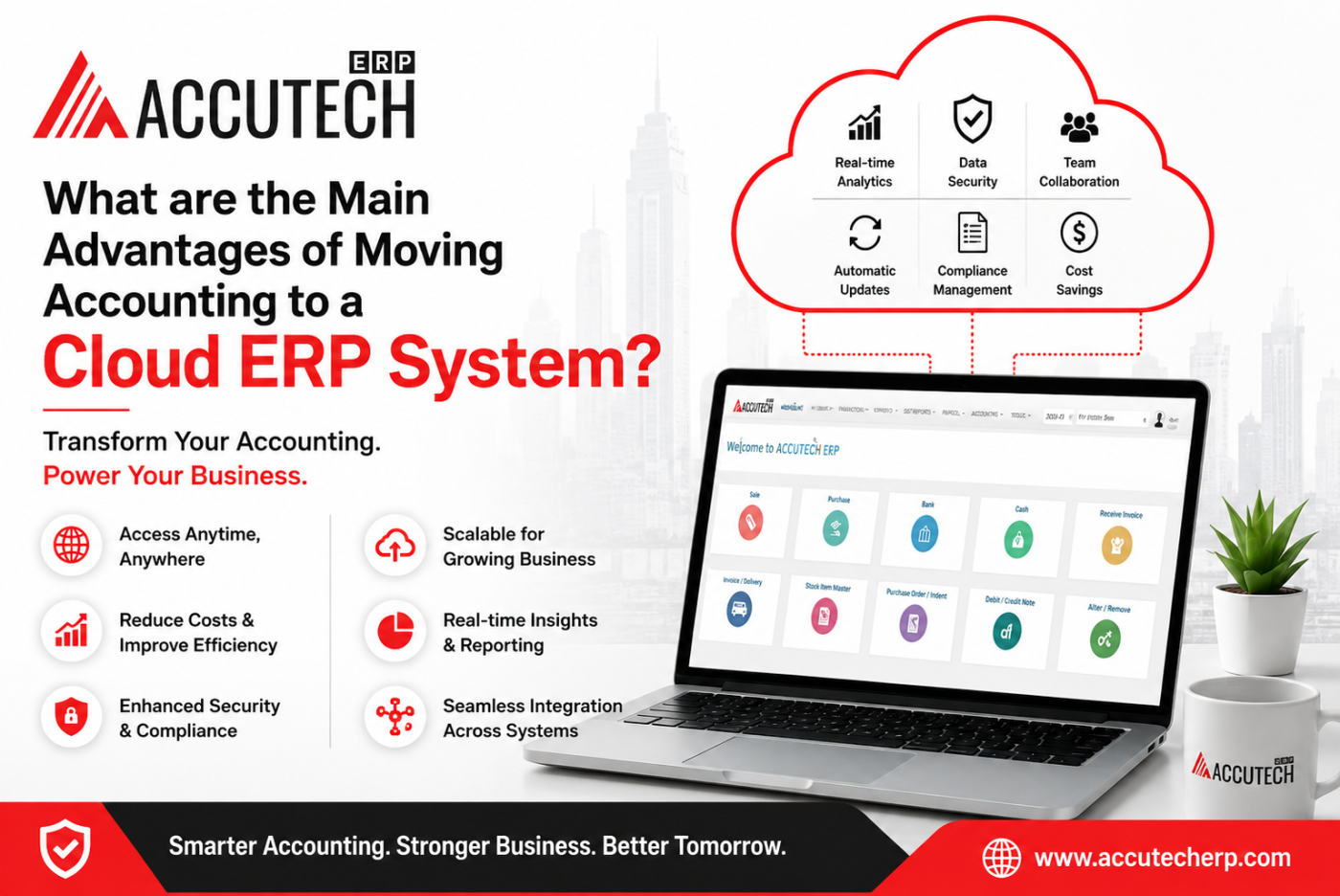
In today's rapidly evolving business landscape, accounting departments face unprecedented pressure to operate more efficiently while maintaining accuracy and compliance. Traditional on-premise accounting systems are becoming obsolete, and many organizations are discovering that cloud ERP systems offer transformative benefits. Whether you're a small business owner or managing a large enterprise, understanding the advantages of cloud-based accounting solutions is crucial for staying competitive.
This comprehensive guide explores the main advantages of moving your accounting operations to a cloud ERP system, helping you make an informed decision about your organization's digital future.
1. Enhanced Accessibility and Remote Work Capabilities
One of the most compelling advantages of cloud ERP systems is the ability to access your accounting data from anywhere, at any time. Unlike traditional on-premise solutions that require physical presence at the office, cloud-based accounting software enables your team to work seamlessly from home, client offices, or while traveling.
Real-Time Collaboration Across Teams
Cloud ERP platforms facilitate real-time collaboration among accounting professionals. Multiple team members can work on the same financial documents simultaneously, eliminating the need for version control issues and email chains. This collaborative approach accelerates workflows and reduces the time required to complete critical accounting tasks such as month-end closing, reconciliation, and financial reporting.
By implementing a cloud ERP system, organizations can maintain productivity regardless of location or time zone, which is especially valuable for distributed teams and global operations.
2. Significant Cost Savings and Improved Financial Planning
Transitioning to a cloud ERP solution delivers substantial cost benefits that directly impact your bottom line. Traditional accounting systems require significant upfront capital investment in hardware, software licenses, and infrastructure maintenance.
Elimination of Infrastructure and Maintenance Costs
Cloud ERP systems eliminate the need for expensive on-premise servers and the ongoing costs associated with their maintenance. Your cloud ERP provider handles all system updates, security patches, and infrastructure management, reducing the burden on your IT department. This operational expense model provides better budget predictability compared to unpredictable hardware failures and emergency repairs.
Reduced Labor Costs for System Administration
By moving to cloud ERP, organizations can significantly reduce their IT staffing requirements. Your technical team no longer needs to dedicate resources to managing servers, applying patches, or troubleshooting infrastructure issues. These resources can be redirected toward more strategic initiatives that directly contribute to business growth and financial optimization.
The lower total cost of ownership makes cloud ERP systems particularly attractive for growing businesses seeking to maximize profitability without compromising operational capabilities.
3. Automatic Updates and Enhanced Security Features
Cybersecurity threats continue to evolve, making it essential for accounting systems to maintain the highest security standards. Cloud ERP providers invest heavily in security infrastructure and continuously update their systems to protect against emerging threats.
Automatic System Updates and Compliance Management
One of the key advantages of cloud ERP systems is that updates are deployed automatically without disrupting your operations. Your accounting software remains current with the latest features, security patches, and regulatory compliance requirements. This eliminates the time-consuming and risky process of scheduling manual system upgrades that could cause downtime and operational disruptions.
Advanced Data Protection and Backup Systems
Cloud ERP providers maintain redundant backup systems and disaster recovery capabilities that most organizations cannot afford to implement independently. Your financial data is automatically backed up multiple times daily across geographically distributed data centers, ensuring business continuity in case of unforeseen events.
The security infrastructure of modern cloud ERP systems often exceeds the security capabilities of on-premise solutions, making them a safer choice for protecting sensitive financial information.
4. Improved Scalability for Growing Organizations
As businesses grow, their accounting and financial management needs become increasingly complex. Cloud ERP systems are designed to scale effortlessly, growing with your organization without requiring significant infrastructure investments or system replacements.
Flexible Resource Allocation and Performance
Cloud platforms automatically allocate computing resources based on your current needs. Whether you're processing daily transactions for a small team or managing complex financial operations across multiple departments and locations, your cloud ERP system adapts seamlessly.
Simplified Multi-Location and Multi-Currency Operations
For organizations with multiple locations, subsidiary companies, or international operations, cloud ERP systems offer tremendous advantages. These platforms can handle multi-location accounting, multi-currency transactions, and complex consolidation processes without requiring separate systems or manual reconciliation.
Scalability enables organizations to add new users, locations, and functionality without concerns about system capacity.
5. Advanced Analytics and Real-Time Financial Reporting
Modern cloud ERP systems provide powerful analytics and business intelligence capabilities that transform raw accounting data into actionable insights.
Instant Financial Dashboards and KPI Monitoring
Cloud ERP platforms offer customizable dashboards that display key performance indicators and financial metrics in real-time. Executives and accounting professionals can monitor cash flow, profit margins, expense trends, and other critical metrics instantly.
Sophisticated Reporting Capabilities and Data Visualization
Accounting teams using cloud ERP systems can generate comprehensive reports with just a few clicks. Advanced data visualization tools present complex financial data in intuitive formats that stakeholders can quickly understand.
The superior analytics capabilities of cloud ERP systems provide competitive advantages by enabling organizations to identify trends, forecast financial outcomes, and respond quickly to changing market conditions.
6. Seamless Integration with Existing Business Systems
Modern organizations use multiple software solutions for different business functions. Cloud ERP systems are designed with integration capabilities that enable seamless data flow between accounting systems and other business applications.
API-Based Connectivity and Third-Party Integrations
Cloud ERP platforms offer robust APIs and pre-built connectors that integrate with CRM systems, inventory management software, payroll platforms, e-commerce applications, and banking systems.
Reduced Manual Data Entry and Enhanced Accuracy
When systems communicate automatically through integrations, manual data entry errors are reduced significantly. Sales orders, customer payments, and inventory adjustments flow automatically into accounting records.
This automation improves accuracy and frees accounting staff to focus on strategic financial planning and analysis.
7. Compliance and Regulatory Support
Maintaining compliance with constantly changing accounting regulations and tax requirements represents a significant challenge for organizations of all sizes. Cloud ERP systems address this challenge by providing built-in compliance features and automatic updates.
Automated Compliance Tracking and Audit Trails
Cloud ERP systems maintain comprehensive audit trails that document every transaction, change, and user action within the accounting system. This simplifies compliance verification and audit preparation.
Support for Multiple Accounting Standards and Regulatory Requirements
Modern cloud ERP systems support multiple accounting frameworks such as GAAP and IFRS. Automatic updates ensure that your system reflects the latest tax regulations and compliance requirements.
The built-in compliance capabilities of cloud ERP systems reduce the risk of regulatory violations and associated penalties.
Why Choose AccutechERP for Your Cloud Accounting Needs?
Comprehensive Feature Set and Industry Expertise
AccutechERP combines enterprise-grade accounting functionality with user-friendly interfaces. The platform delivers seamless accessibility, analytics, automated compliance support, and strong security features.
Dedicated Support and Implementation Excellence
AccutechERP provides comprehensive implementation support, training, and ongoing customer success services to ensure smooth adoption.
Whether you're a small business or a large enterprise, AccutechERP has the expertise and resources to support your success.
Conclusion: The Future of Accounting is in the Cloud
The advantages of moving accounting operations to a cloud ERP system are compelling and increasingly difficult to ignore. Enhanced accessibility, cost savings, advanced security, scalability, analytics, integrations, and compliance support create a modern accounting infrastructure that supports organizational growth and success.
Organizations that embrace cloud ERP solutions position themselves to compete more effectively, make faster decisions, and allocate resources more efficiently.
Visit AccutechERP today to discover how our cloud ERP solution can transform your accounting department.
Key Takeaways
- Remote accessibility enables accounting professionals to work from anywhere
- Significant cost reductions through elimination of on-premise infrastructure
- Automatic updates and advanced security features protect financial data
- Scalable architecture grows with your organization
- Real-time analytics provide instant financial visibility
- Seamless integrations improve operational accuracy
- Built-in compliance features support regulatory requirements
- Enhanced collaboration through real-time document sharing